CPI(M) MLA Nirmal Biswas Opposes Proposed Diversion of Tea Garden Land for Tourism and Commercial Activities at Select Committee Meeting on 14th Amendment Bill
By Our Correspondent
Agartala, November 18, 2026
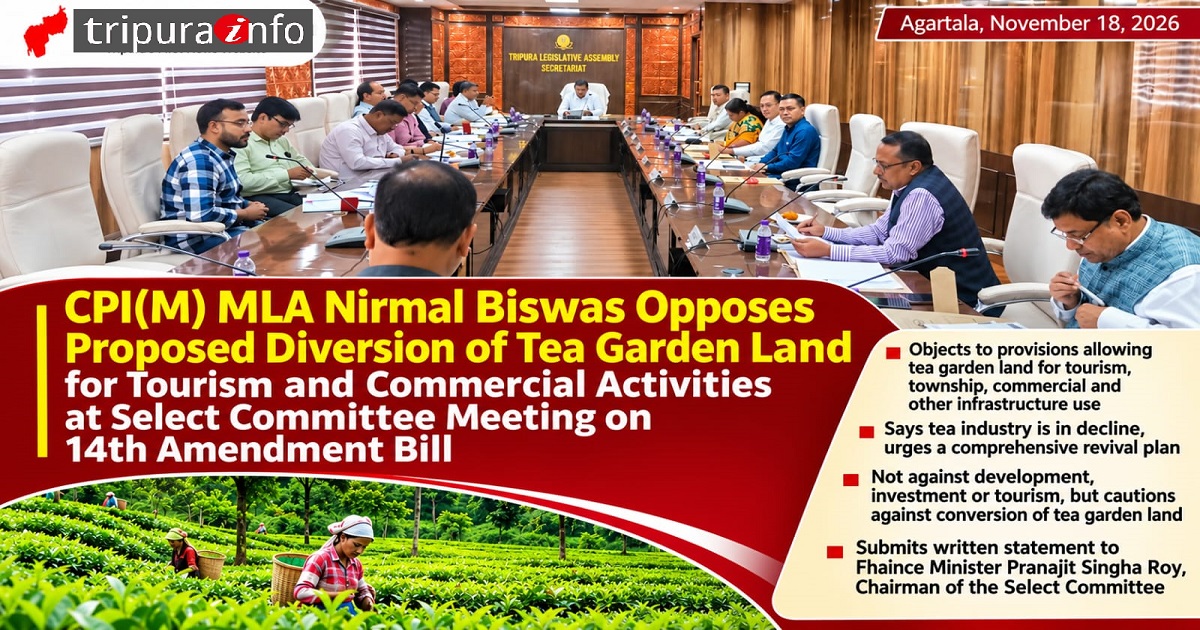 A meeting of the Select Committee of the Tripura Legislative Assembly, constituted to examine the proposed The Tripura Land Revenue and Land Reforms (Fourteenth Amendment) Bill, 2026, was held at the State Secretariat on Wednesday under the chairmanship of Finance Minister Pranajit Singha Roy.
The meeting discussed various aspects of the proposed amendments, including their legal implications and possible impact on the state's existing land revenue and land reforms system. Members exchanged views and suggestions on the practical implementation of the proposed provisions, taking into consideration public interest and the state's developmental requirements.
Among those present at the meeting were Tipra Motha MLA Brishaketu Debbarma, CPI(M) MLA Nirmal Biswas and several other legislators.
However, CPI(M) MLA Nirmal Biswas emerged as a strong voice of opposition during the discussion, particularly regarding the proposed provisions that would allow tea garden land to be utilised for tourism, township development, commercial activities and other infrastructure-related purposes.
In his statement submitted before the Select Committee, Nirmal Biswas expressed serious reservations about the proposed provisions, arguing that the government should concentrate on reviving Tripura's struggling tea industry rather than creating opportunities for the gradual diversion of tea garden land for other commercial purposes.
Referring to the declining workforce in the state's tea industry, Biswas pointed out that the number of tea garden workers in Tripura has been steadily decreasing. He also highlighted the financial difficulties of the Tripura Tea Development Corporation, which, according to him, was once a profitable organisation but is now passing through a period of losses.
He argued that the tea industry requires a comprehensive, well-planned and effective revival strategy to restore its economic viability, protect existing employment and secure the future of tea garden workers.
"Instead of taking effective initiatives to revive Tripura's tea industry, the government is gradually creating opportunities for tea garden land to be used for other activities," Biswas maintained in his statement.
Clarifying his position, the CPI(M) legislator said that his opposition should not be interpreted as resistance to development, investment, tourism or the establishment of new industries in Tripura.
He stated that he was not against creating employment opportunities through investment, tourism projects or industrial development. However, he strongly opposed the specific proposals in the amendment bill that could facilitate the utilisation of existing tea garden land for unrelated commercial activities.
According to Biswas, tea garden land has economic, social and employment-related importance, and any decision concerning its future use must take into account the interests of workers, the sustainability of the tea industry and the long-term economic consequences for the state.
He maintained that the priority should be to strengthen the existing tea industry, improve its productivity and profitability, and create sustainable employment opportunities for people dependent on tea gardens.
Biswas also informed that, apart from presenting his objections during the Select Committee's second meeting, he formally submitted his views in writing to the committee's chairman, Finance Minister Pranajit Singha Roy.
The Fourteenth Amendment Bill was referred to the Select Committee during the previous session of the Tripura Legislative Assembly for further examination.
The latest meeting was the committee's second sitting, during which members considered the proposed amendments and their possible implications.
The proposed changes concerning the use of tea garden land are likely to remain an important subject of discussion as the committee examines the bill.
The central question emerging from Wednesday's meeting is how Tripura can promote tourism, investment, infrastructure and commercial development without undermining the future of its traditional tea industry and the livelihoods of thousands of people associated with tea gardens.
The final recommendations of the Select Committee and the government's subsequent position will be important in determining the future course of the proposed amendment.
more news...