Agroforestry Project Boosts Rural Livelihoods in Tripura, Chakma Farmer Earns Rs 40,000 from Ginger Harvest on Forest Rights Land
By Our Correspondent
Agartala, November 16, 2026
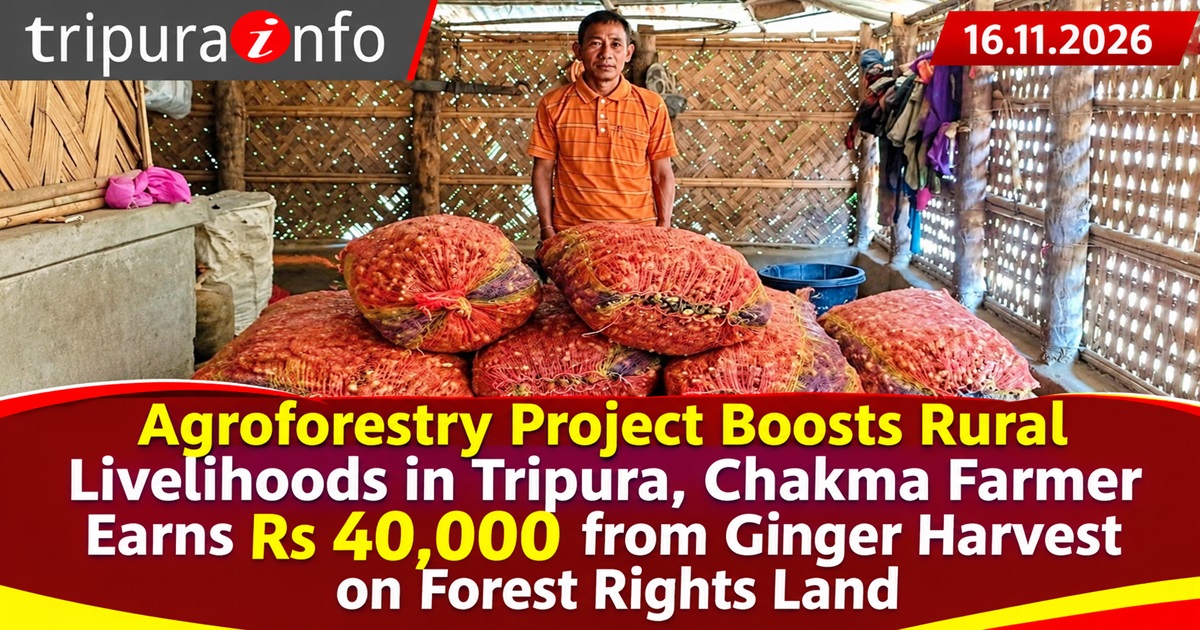 An Indo-German development cooperation initiative implemented by the Tripura Forest Department is emerging as a promising model for improving rural livelihoods through sustainable agroforestry, with a beneficiary farmer in Dhalai district expecting to earn approximately Rs 40,000 from ginger cultivation on his recognised forest rights land.
The success story comes from Labancherra Village Committee under Chailengta Range, where Shri Goutamani Chakma, an individual beneficiary of the Indo-German Development Cooperation – Climate Resilient Forest Landscape and Community Development (IGDC–CREFLAT) Project, has harvested ginger cultivated on his 0.5-hectare land recognised under the Forest Rights Act, 2006.
According to a press note issued by the project authorities on November 16, the harvested ginger is expected to generate an income of around Rs 40,000, providing an early financial return to the beneficiary household from the agroforestry intervention.
During the financial year 2025–26, financial assistance amounting to Rs 54,796 was sanctioned for Chakma's 0.5-hectare plot. Under the programme, he received 208 arecanut seedlings, 100 banana plants, 51 guava seedlings, 4,000 pineapple suckers and 100 kg of ginger seeds for cultivation.
While ginger has already provided the first expected source of income, the other horticultural and perennial plants are expected to generate additional economic benefits in the coming years as they mature and start producing fruits and other agricultural products.
The IGDC–CREFLAT Project is promoting a diversified three- and four-tier agroforestry model designed according to local climatic conditions, beneficiary preferences and approved Village Development Plans.
The model integrates different categories of crops and plants on the same plot of land. These include below-ground crops such as ginger, turmeric and yam; field crops such as pineapple, paddy, vegetables and pulses; middle-canopy horticultural species such as lemon, guava, papaya and banana; and perennial trees including arecanut, agar, jackfruit and mango.
Under the prescribed four-tier model, the project also emphasises sustainable agricultural practices through the use of farmyard manure and biofertilisers instead of chemical fertilisers and chemical pesticides or insecticides.
The approach is intended to improve soil health, promote biodiversity, diversify agricultural production and reduce the vulnerability of rural households to climate-related risks.
The agroforestry initiative is part of a broader effort to transform recognised Individual Forest Rights (RoFR) patta lands, particularly fallow and underutilised plots, into productive livelihood assets.
Against a physical target of 2,500 hectares, agroforestry plantations have so far been established over 1,341.5 hectares, covering 2,523 beneficiaries across 12 forest ranges in Dhalai and North Tripura districts.
This represents approximately 54 per cent of the project's targeted plantation area.
The project seeks to ensure that forest rights beneficiaries can derive sustainable economic benefits from their recognised landholdings while simultaneously contributing to climate-resilient forest landscape management.
One of the major objectives of the intervention is to provide beneficiaries with both immediate and long-term economic returns.
Short-duration crops such as ginger, turmeric and vegetables can generate income during the initial years, while fruit-bearing plants and perennial trees are expected to provide more sustained economic opportunities over time.
Crop diversification is also expected to improve household food and nutritional security.
more news...