Police Publicity Over Divyangjan Children’s Visit to Matabari Temple Draws Attention to Unresolved Permanent Ramp Infrastructure Deficiencies
By Our Correspondent
Agartala, November 10, 2026
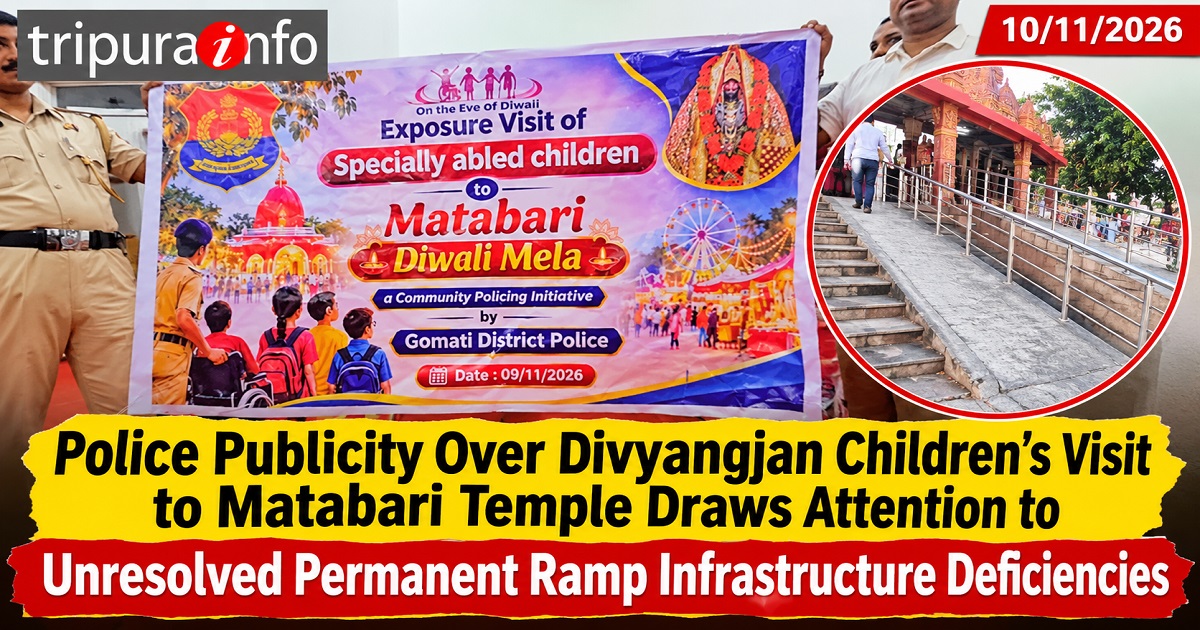 The question of accessibility for senior citizens and persons with disabilities (Divyangjan) at the historic Mata Tripureswari Temple in Udaipur has once again come under scrutiny following a publicity initiative by the Gomati District Police during the ongoing Matabari Diwali Mela. Despite reportedly spending around Rs 50 crore on the development and beautification of the temple complex, the administration has allegedly failed to provide a permanent ramp enabling wheelchair-dependent devotees and persons with severe mobility restrictions to reach the hilltop shrine conveniently.
The controversy has intensified after the Gomati District Police organised an event titled "Exposure Visit of Specially Abled Children to Matabari Diwali Mela – A Community Policing Initiative" on November 9, 2026. A promotional banner carrying the Tripura Police emblem and the name of Gomati District Police was also displayed during the programme. The police administration subsequently publicised the initiative through its official Facebook page.
The programme reportedly involved taking around 25 specially abled children to the Mata Tripureswari Temple and the Diwali Mela. The children were provided an opportunity to visit the religious site and enjoy the festive atmosphere, with arrangements for food, ice cream, chocolates and other refreshments.
While the humanitarian intention behind organising such an initiative is not being questioned, the timing and manner of its publicity have raised questions. Critics believe that, following recent criticism over the absence of a permanent ramp at the hilltop temple, the administration is attempting to project Matabari as a Divyangjan-friendly destination by highlighting a special visit by children with disabilities, rather than addressing the basic infrastructural shortcomings.
Several family members of senior citizens and persons with disabilities have reportedly expressed dissatisfaction with the accessibility arrangements at the temple. According to them, wheelchair-dependent devotees still face considerable difficulties in reaching the hilltop shrine to offer prayers to Mata Tripureswari.
Although a lift is reportedly available within the temple complex, questions have been raised about its actual accessibility to ordinary devotees with disabilities. Families allege that the lift is primarily intended for VIP use, that there is no clear indication establishing it as a dedicated facility for Divyangjan devotees, and that ordinary wheelchair users are not assured access to it.
Following the controversy over the absence of a ramp, claims have also reportedly emerged that a special lift facility is available for persons with disabilities. However, families want the administration to clarify whether the facility is genuinely accessible to all wheelchair-dependent devotees or whether its use remains restricted.
The fundamental question remains: if the temple complex is genuinely accessible to persons with disabilities, why is there no permanent, clearly identified and independently usable ramp or equivalent barrier-free access arrangement connecting devotees to the hilltop shrine?
The development of Mata Tripureswari Temple has involved substantial public expenditure, reportedly around Rs 50 crore. Yet, the absence of a permanent accessibility arrangement for senior citizens and Divyangjan has become a major concern. A religious destination of such importance should be accessible not merely during special government-organised programmes but throughout the year to every devotee, irrespective of physical limitations.
The issue also has legal implications. The Rights of Persons with Disabilities Act, 2016, particularly Sections 40, 44 and 45, provides for accessibility standards and compliance in public infrastructure. The objective is to ensure that persons with disabilities can access public buildings and facilities without unnecessary physical barriers.
A special visit organised by the police cannot be treated as evidence that an entire temple complex meets the requirements of universal accessibility. Providing temporary assistance, arranging security personnel or offering occasional access through an elevator cannot replace a permanent and transparent accessibility system.
more news...