IGDC CREFLAT Project Trains Finance Officers to Strengthen Digital Financial Management, Emphasis on Proper Documentation
By Our Correspondent
Agartala, November 7, 2026
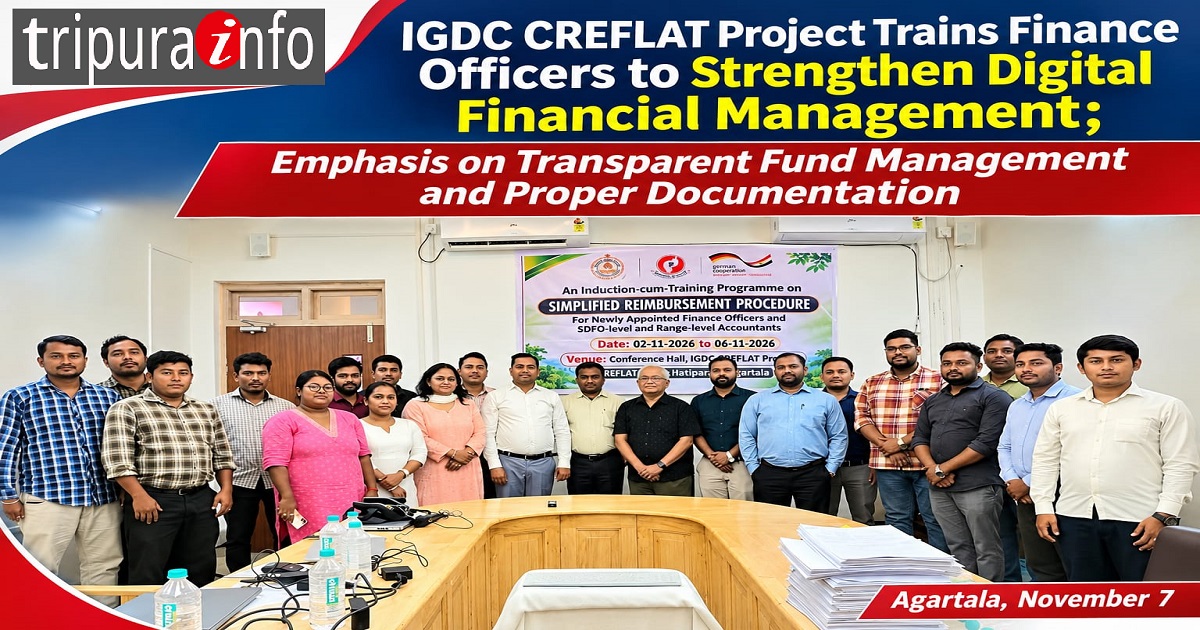 With an emphasis on strengthening financial transparency, accountability and efficient utilisation of public funds, the Indo-German Development Cooperation (IGDC) CREFLAT Project has successfully completed a five-day specialised capacity-building training programme on "Simplified Reimbursement Procedure" for newly appointed Finance Officers and Accountants. The programme was conducted from November 2 to November 6, 2026.
The training is significant from the perspective of public interest as proper financial management, accurate accounting, timely reimbursement and systematic maintenance of expenditure records are essential for ensuring that development projects are implemented efficiently and that allocated funds are utilised for their intended purposes.
The programme was organised to familiarise newly appointed financial personnel with standardised procedures for handling project funds, maintaining accounts, preparing reimbursement claims and ensuring proper financial documentation. Strengthening these skills is expected to improve the quality of financial reporting and minimise procedural errors and delays in the reimbursement process.
The inaugural session was addressed by Shri S. Prabhu, IFS, CEO and Project Director of the IGDC CREFLAT Project. In his welcome address, he emphasised the importance of transparent, systematic and standardised financial management in achieving the objectives of development projects. He also highlighted the responsibility of financial personnel in ensuring that project activities are supported by proper financial procedures and accountability mechanisms.
PMC Expert Dr. Vincent Darlong attended the programme as the Special Guest and delivered the keynote address. He discussed the major components of the project, community livelihood development and sustainable resource management strategies being pursued under the IGDC initiative.
An introductory presentation explaining the objectives, framework and context of the training module was delivered by Shri Tirthankar Majumder, Senior Technical Officer (STO-CID).
The technical and financial sessions were conducted by Shri Deep Shankar Chatterjee, Senior Finance Officer (SFPO), along with Project Management Consultancy experts Ms. Suman and Mr. Aman Kumar. The training included both theoretical discussions and practical exercises to familiarise participants with the financial procedures required for effective project administration.
Special emphasis was placed on fund management, maintenance of accounts, preparation of documentation checklists, systematic preservation of financial records, data maintenance for reimbursement claims and accurate completion of reimbursement forms. Participants also received practical guidance on avoiding documentation errors and maintaining consistency in financial records.
One of the notable outcomes of the programme was the distribution of new laptops to all participating Finance Officers and Accountants upon successful completion of the five-day training. The laptops, funded by the project, are intended to facilitate digital accounting, electronic record-keeping, preparation of reimbursement claims and timely financial reporting.
The provision of digital equipment is expected to strengthen the financial management infrastructure at the operational level and improve the efficiency of project-related accounting activities.
The valedictory session concluded with a formal vote of thanks delivered by Shri Bidhan Das, TFS, APO and DDO. He acknowledged the contributions of the project leadership, resource persons, PMC experts and participants in making the programme successful.
The training programme underlines the importance of building institutional capacity and strengthening financial management systems in development initiatives. Effective implementation of standardised reimbursement procedures and transparent accounting practices can contribute to better monitoring of public expenditure, improved project delivery and greater accountability in development activities, particularly those intended to benefit local communities and improve their livelihoods.
more news...