Huge Cannabis Plants Destroyed in Massive Joint Operation in Boxanagar After Attacks on BSF Personnel, 650 Illegal Plantations Destroyed
By Our Correspondent
Agartala, November 6, 2026
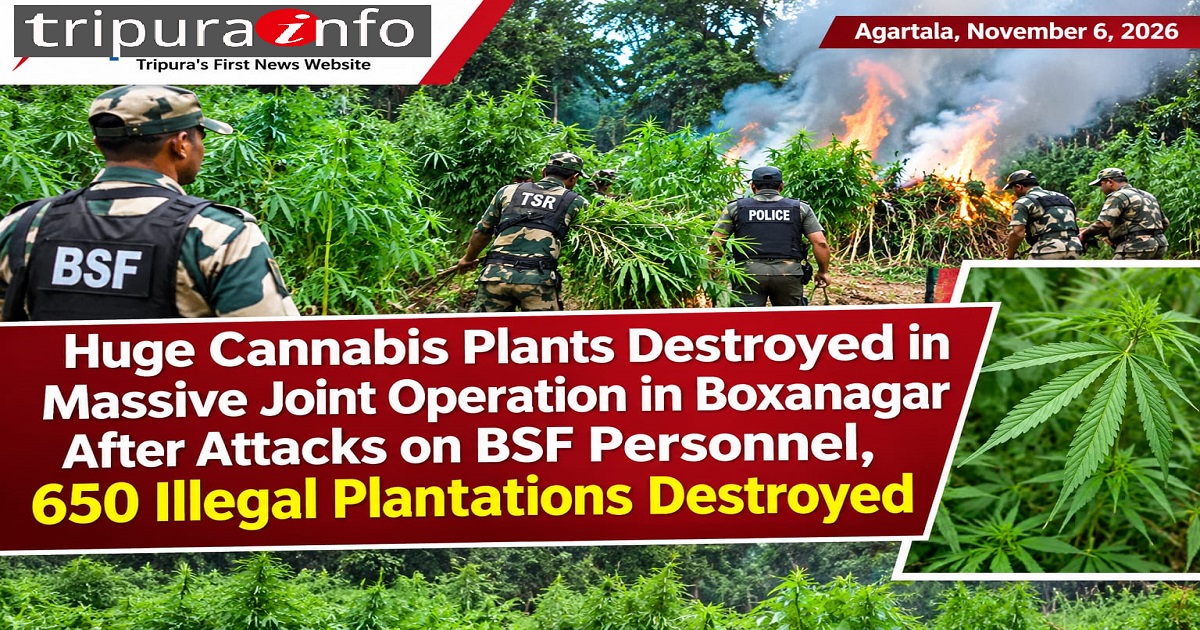 In one of the largest anti-narcotics operations reported in Tripura in recent times, Tripura Police, the Border Security Force (BSF) and Tripura State Rifles (TSR) have jointly destroyed huge amount of illegal cannabis plants spread across nearly 650 plantations in the Boxanagar area of Sepahijala district over the past two days.
According to information provided by local police sources, extensive operations were conducted in forest areas, remote locations and vulnerable stretches along the international border with Bangladesh. The cannabis plants, allegedly cultivated for illegal trafficking and smuggling across the international border, were uprooted and destroyed, with large quantities reportedly burnt during the operation.
The massive crackdown has assumed particular significance following the recent attacks on BSF personnel in the Kalamchoura–Boxanagar area. The attacks have raised serious concerns over the security situation along the border and the growing influence of organised illegal activities in the region.
The scale of the destruction has also raised an uncomfortable question: how could huge amount of cannabis plants, spread across approximately 650 plantations, be cultivated in the area without the authorities taking effective action earlier?
For years, allegations have circulated that sections of the Boxanagar area have witnessed extensive illegal cannabis cultivation, with certain individuals allegedly accumulating substantial wealth through the narcotics trade. There are also allegations of political protection and local influence behind the illegal cultivation. However, these allegations require an independent investigation, and the identities and possible involvement of any political representatives or other influential individuals must be established through evidence.
Questions have also been raised about whether local law enforcement agencies were adequately monitoring the forest areas and remote border villages where such extensive cultivation was taking place. If these plantations had existed for years, it would be difficult to explain how such a large illegal agricultural network could have expanded without the knowledge of local intelligence and enforcement agencies.
The recent joint operation, particularly after the attacks on BSF personnel, has intensified speculation about whether stronger intervention from higher authorities was required before such a large-scale crackdown could take place. The circumstances surrounding the timing of the operation and the alleged failure to act against illegal cultivation over previous years deserve closer scrutiny.
The incident has also brought the government's much-publicised campaign to build a 'Nasha Mukt Tripura' under renewed public scrutiny. While the state government regularly speaks about combating drug trafficking, destroying cannabis plantations and taking action against narcotics networks, the discovery of nearly 19 lakh cannabis plants in a single district raises serious questions about the effectiveness of the existing enforcement mechanism.
The government and the police administration must clarify how many of these plantations had previously been identified, whether any cases were registered against their owners, how many people were arrested in connection with the cultivation, and whether any financial investigations were conducted to identify the beneficiaries of the illegal trade.
Merely destroying cannabis plants cannot provide a permanent solution. The authorities must identify the landowners, cultivators, financiers, transport networks and alleged protectors behind the illegal business. A comprehensive investigation into the financial links and possible political or administrative connections of the narcotics network is equally necessary.
The administration must also examine whether any lapses, deliberate negligence or failure of intelligence gathering allowed such extensive illegal cultivation to continue in a sensitive international border area.
more news...