Tripura Erupts in Protest Over Alleged Racial Harassment of Tribal Youth by Delhi Content Creator, FIRs Filed, Arrest Demand Grows
By Our Correspondent
Agartala, October 22, 2026
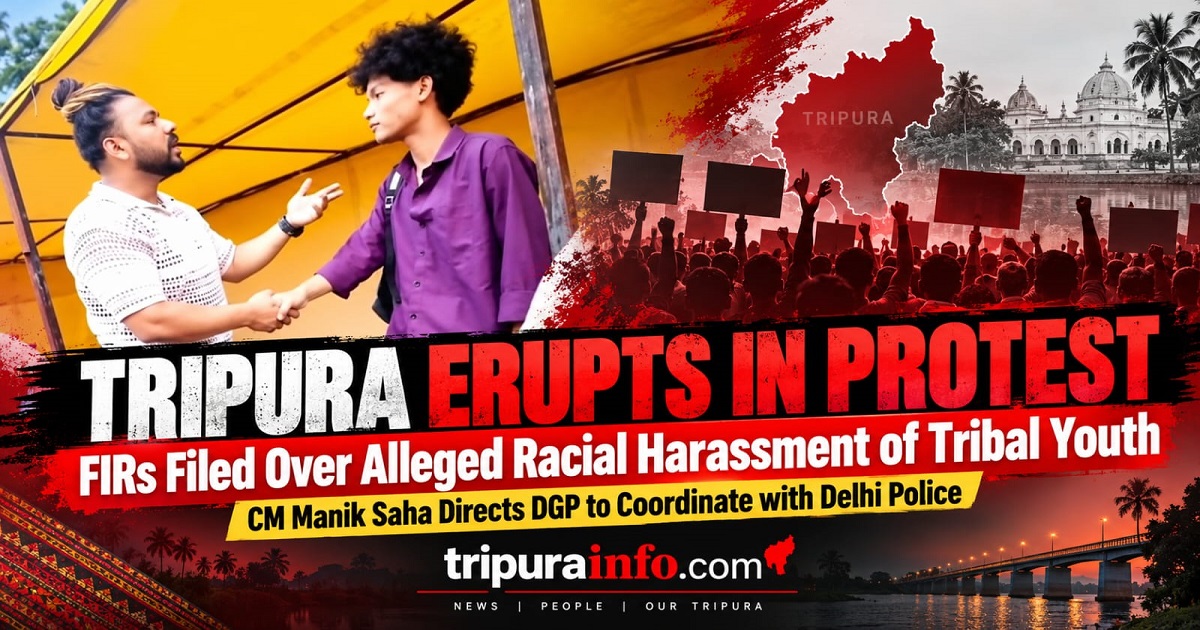 A controversy over an alleged incident of racial harassment involving a tribal youth from Tripura and a Delhi-based content creator identified as Amir Sokin has triggered widespread outrage across Tripura, with several political and social organisations filing police complaints and demanding his immediate arrest.
The controversy erupted after a video circulated widely on social media, allegedly showing the content creator addressing a tribal youth from Tripura with remarks such as “Chinese” and “chini chini”. The video has drawn sharp criticism from political leaders, student organisations and members of civil society, who have described the alleged conduct as humiliating, discriminatory and an affront to the dignity of people from the Northeast.
The complainants have also alleged that the name of Tripura was mispronounced or distorted during the incident, further aggravating public anger.
Several organisations have approached police stations across Tripura, seeking legal action against the content creator. Among those that have reportedly filed complaints are the Youth Tipra Federation (YTF) and the Twipra Indigenous Students Federation (TISF), DYFI, TYFI, which approached Agartala's NCC and West Agartala Police Stations.
Political and many social organisations have also demanded that the police investigate the video, identify the circumstances surrounding the incident and initiate appropriate legal proceedings against the person concerned.
The issue has drawn participation from different political camps, including the CPI(M), Congress and Tipra Motha, with leaders and organisations demanding accountability over the alleged racial remarks.
The absence of a reported FIR or an official condemnation from the BJP has also become a subject of political discussion, as opposition leaders and social organisations press for a united response to the controversy.
Meanwhile, Tripura Chief Minister Dr Manik Saha has reportedly directed the Director General of Police (DGP) to coordinate with Delhi Police in connection with the matter.
The direction is significant because the person accused of making the alleged remarks is identified as a Delhi-based content creator. Coordination between the police authorities in Tripura and Delhi is expected to facilitate the examination of the video, verification of the allegations and any further legal action warranted by the investigation.
Leaders from across the political spectrum have called for the accused to be brought within the ambit of the law.
Tipra Motha founder Pradyot Kishore Debbarma, CPI(M) leader Jitendra Chaudhury and Congress leader Birajit Sinha are among the political figures whose demands for action have been highlighted in the public debate surrounding the incident.
The demand for accountability has increasingly been framed as an issue of dignity and equal treatment for the people of Tripura and the wider Northeast, rather than merely a dispute over a social media video.
Amid mounting criticism, the content creator reportedly posted an apology video on social media, claiming that the incident was “scripted”.
The explanation has failed to satisfy many people in Tripura, who argue that describing the incident as scripted does not automatically justify the use of language perceived as racially derogatory or the public humiliation of an individual on the basis of appearance or ethnic identity.
“If it was scripted, can racism also be scripted?” is the question being raised by critics demanding accountability.
Several voices have insisted that an apology on social media should not replace a lawful investigation. They maintain that the circumstances of the video, the intention behind the remarks and the nature of the alleged conduct should be examined by the competent authorities.
In a strongly worded public reaction, many people viewed and expressed that the apology should not be treated as sufficient to close the matter.
The controversy has once again brought the issue of racial stereotyping and discrimination against people from Northeast India into the national spotlight.
People from the region have repeatedly expressed concern that differences in facial features, ethnicity, language and cultural practices are sometimes used as grounds for offensive remarks, ridicule and discriminatory treatment in other parts of the country.
Critics argue that such incidents reflect a wider lack of awareness about the history, geography, ethnic diversity and cultural traditions of the Northeastern states.
They also point out that the consequences of racial harassment can extend beyond the individual concerned, affecting the sense of security and belonging of entire communities living, studying or working outside their home states.
The concern is particularly serious when videos containing allegedly derogatory remarks are circulated online, potentially amplifying the humiliation and exposing the individuals concerned to further harassment.
Public representatives and civil society groups have therefore called for a response that combines appropriate legal action with sustained efforts to improve awareness and understanding of the Northeast across the country.
One of the significant demands emerging from the controversy is the inclusion of comprehensive and separate coverage of the history and geography of every Indian state in school textbooks across the country.
Advocating such proposal, Tripurainfo.com editor Jayanta Debnath argued that students should learn about the geographical location, historical development, indigenous communities, languages, traditions and cultural contributions of all states, including those in Northeast India.
They have called upon the Central Government and state governments to work with educational boards, including CBSE and CISCE (formerly ICSE-associated school education), to ensure that textbooks provide adequate and accurate information about every region of the country.
According to those supporting the demand, better knowledge of India's regional diversity could help challenge stereotypes, reduce ignorance and encourage mutual respect among students from different backgrounds.
They maintain that education should not concentrate exclusively on a limited number of prominent regions or historical narratives but should give students a meaningful understanding of the entire country.
The demand also highlights the shared responsibility of the Centre and state governments to promote education that strengthens constitutional values, national integration and respect for cultural diversity.
more news...