Tripura Launches Ration Card Verification Drive,‘Silent’ Cards to Be Temporarily Inactivated After 6 Months Without Ration Withdrawal
By Our Correspondent
Agartala, October 1, 2026
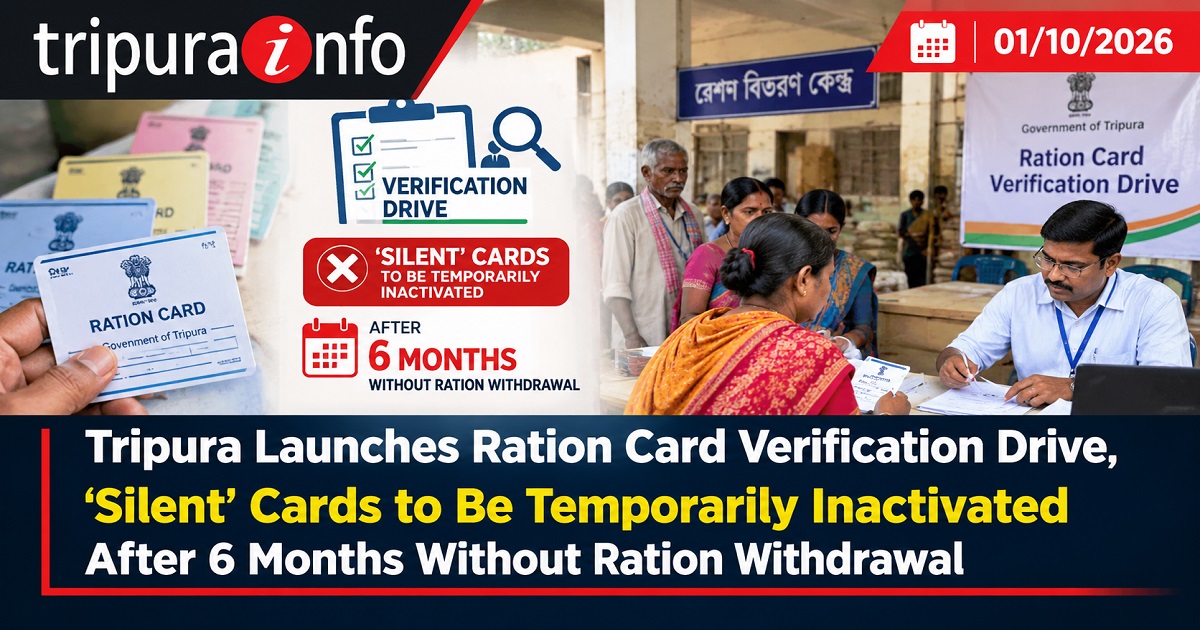 The Tripura Food, Civil Supplies and Consumer Affairs Department is set to begin a major verification exercise for ration-card beneficiaries from October 1, aimed at identifying inactive, duplicate and potentially ineligible beneficiaries under the State’s SMART-PDS system.
According to the department’s notification, ration cards from which no ration has been lifted for six consecutive months will be identified as “silent ration cards” and temporarily made inactive. During the inactive period, ration allocation against such cards will remain suspended.
The department has also introduced a three-month period for beneficiaries to complete e-KYC verification. Beneficiaries whose cards are placed under the verification process will have to establish their eligibility through the prescribed electronic verification mechanism. Failure to complete the process within the stipulated period may result in the ration card being removed from the active system, according to the notification.
The new system requires beneficiaries to use the prescribed e-KYC facility through the PDS system and provide the necessary details to establish their identity and eligibility.
The State’s existing Ration Card Management System (RCMS) is integrated with Aadhaar-based e-KYC and the AePDS platform. Government data indicates that Tripura has around 9.9 lakh ration-card families covering more than 37 lakh members, with Aadhaar seeding for heads of families already reported at 100 percent.
The department has also made facilities available through its online RCMS portal for checking ration-card details, Aadhaar linkage and e-KYC status.
The verification exercise will also examine cases where an individual may have been included in more than one ration card. Where a person is identified as a beneficiary in multiple ration-card records, the department may classify one record as a “duplicate beneficiary” and initiate the prescribed correction process.
If the concerned person successfully completes the e-KYC process within the stipulated period, the eligible ration card will continue to receive the applicable benefits, while the person's name may be removed from other duplicate cards.
The department has also asked beneficiaries to ensure that their Aadhaar details and mobile number are correctly linked with their ration-card records. The official RCMS portal specifically provides for Aadhaar authentication through an OTP sent to the registered mobile number.
The latest AePDS data provides an indication of the scale of the exercise. As of September 30, the Tripura system showed 9,92,585 total ration cards, of which 9,02,644 cards had availed ration during September, while the monthly transaction rate stood at 90.94 percent.
This means that a significant number of ration cards did not record a transaction during the month, although a single month's non-utilisation does not by itself mean that a card will be classified as a “silent ration card”; the department's stated criterion is six consecutive months without lifting ration.
Beneficiaries who have not lifted ration for a prolonged period, have changed their residence, have duplicate entries, or have not completed e-KYC have been advised to check their records and complete the required formalities.
The Food Department has provided a toll-free helpline through the PDS system, including 1967 and 1800-345-3665, for assistance and grievances.
The development has also prompted discussion in some quarters about the broader issue of verification-based exclusion from government databases. However, the ration-card verification exercise and the Election Commission's Special Intensive Revision (SIR) of electoral rolls are legally and administratively separate processes.
The Election Commission's SIR has become the subject of an intense political dispute, with reports indicating that more than 13 crore names were struck from draft electoral rolls across 30 States and Union Territories during the revision process. The Election Commission and the government have said the exercise is intended to remove ineligible, duplicate and other improper entries while protecting eligible voters.
Opposition parties have alleged that the large-scale deletions could exclude genuine voters, while the Election Commission has defended the exercise and its safeguards. Recent reporting also shows that the issue remains under institutional and political scrutiny.
Against this backdrop, questions may arise over how welfare databases are verified and how safeguards are provided to genuine beneficiaries.
more news...