THRC recommends safeguards for businesses affected by public infrastructure projects
By Our Correspondent
Agartala, September 18, 2026
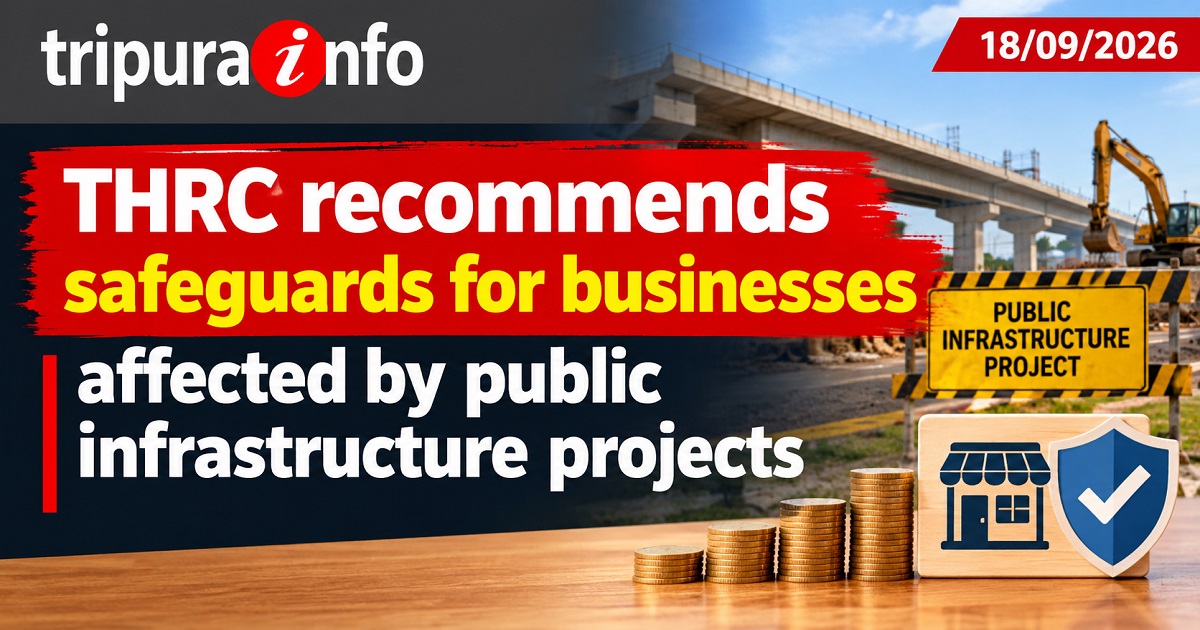 The Tripura Human Rights Commission (THRC) has recommended advance written notice, proper documentation and a dedicated grievance redressal mechanism for private businesses and other lawful establishments affected by public infrastructure projects.
The recommendations were made in an order dated September 9 on a complaint filed by Joyesh Bhowmik, proprietor of Supreme Media, alleging damage to and removal of advertising hoardings during a drainage project undertaken by Agartala Smart City Ltd (ASCL).
The Commission, headed by Justice Arindam Lodh, said the material before it did not establish a human rights violation warranting compensation. However, it observed that the case highlighted shortcomings in communication, documentation and consultation with affected stakeholders during the execution of public projects.
The Commission recommended that ASCL, Agartala Municipal Corporation (AMC) and their executing agencies issue written notices sufficiently in advance when infrastructure work is likely to affect commercial establishments, hoardings, kiosks or other lawful structures.
Such notices should mention the nature of the work, its expected duration and the steps required from affected persons, the Commission said, adding that oral or telephone communication should ordinarily not be treated as sufficient.
It also called for systematic documentation of communications with affected persons, including notices, acknowledgements, photographs taken before and after removal of structures, and records of consultations.
The Commission further recommended that disruption to lawful commercial activities be minimised and livelihoods protected wherever possible.
It suggested establishing a dedicated grievance redressal mechanism for persons affected by Smart City projects, covering issues such as obstruction of access, property damage, shifting of utilities and business losses.
The Commission also recommended sensitising project engineers, contractors and field supervisors about respecting citizens' dignity and livelihoods.
ASCL, AMC and other utility agencies were advised to improve coordination and ensure that affected persons receive clear and consistent information about project-related activities.
The Commission also stressed the importance of preserving call records, photographs, videos and other electronic evidence whenever such material is relied upon in disputes arising from public infrastructure projects.
more news...