Man-Animal Conflict Surges in Khowai as Questions Mount Over Forest Department’s Preventive Measures
By Our Correspondent
Agartala, August 29, 2026
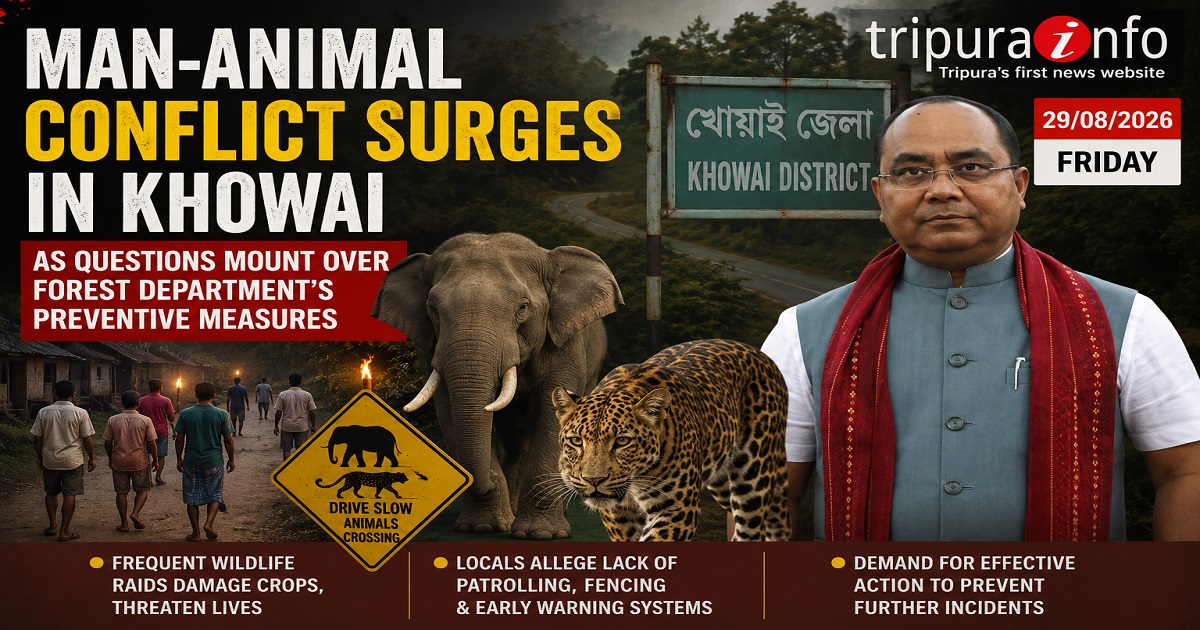 Man-animal conflict has emerged as a growing concern in Tripura, with Khowai district witnessing a sharp rise in reported incidents and increasing questions over the effectiveness of the Forest Department’s preventive measures. Allegations have surfaced that there is still no comprehensive, district-wide strategy at the top level of the department to address the recurring conflict between people and wildlife, particularly in Khowai and some other vulnerable areas, including the surroundings of Sepahijala Zoological Park.
According to figures cited in the Assembly and in the report, Khowai recorded 188 man-animal conflict incidents during 2025-26, compared with 134 incidents in 2024-25 and 151 in an earlier reported period. The latest figure represents a substantial increase and has intensified concerns over the growing challenge of managing elephant and other wildlife movement near human settlements.
The problem is reportedly particularly acute in areas where wild elephants enter villages and agricultural land in search of food. Such incursions can cause crop damage, threaten homes and property and, in some cases, endanger human lives. Wildlife movement into inhabited areas has also raised concerns about the safety of both villagers and animals.
Questions over food availability in forests
Amid the rise in conflict, allegations have been raised over whether adequate attention is being given to creating and maintaining natural food sources for wild animals, elephants, dears, monkeys and birds inside Tripura’s forests and hilly areas.
Critics allege that crores of rupees are spent every year under various programmes connected with wildlife management and feeding, but that there is inadequate visible impact on the ground. They argue that strengthening food and water availability inside forest habitats could reduce the need for wild animals, particularly monkeys and elephants, to move into villages in search of food.
Questions have also been raised over the condition of animals at Sepahijala Zoological Park, with allegations that even captive animals have at times faced difficulties in receiving adequate food.
The allegations have also brought renewed attention to the case of former IFS officer Biswajit Das, who has reportedly faced allegations connected with irregularities in the feeding of animals at Sepahijala Zoo.
According to allegations cited in the matter, a preliminary departmental inquiry had found irregularities for which the officer was held responsible. However, questions are now being raised over the absence of visible departmental action against him. He is currently serving as OSD to Higher Education Minister Kishore Barman, according to the information provided.
Separately, the Forest Department is facing scrutiny over the high-profile cash seizure case involving South Tripura Divisional Forest Officer (DFO) Gaurav Ravindra Wagh, IFS.
Police reportedly seized Rs 59.94 lakh in cash from Mumbai-based Rajendra Chintaman Kaklij, described as a relative of the IFS officer, after he was detained at Agartala Railway Station. But as of now no departmental proceedings initiated against him.
The Forest Minister Animesh Debbarma meanwhile, has claims in state assembly and pointed to a series of measures aimed at reducing man-animal conflict. These reportedly include the creation of water bodies and salt licks, installation of solar-powered street lights, hidden infrared camera traps and conflict-prevention camps in elephant-prone areas.
Anti-depredation squads have reportedly been equipped with wireless communication systems, while watchtowers and tree houses have been constructed to monitor elephant movement. Local villagers are also being engaged as guards and observers.
Vehicles have been provided for patrolling, rescue operations and emergency transportation of injured people, while Quick Response Teams have received specialised training. GPS and radio collars have reportedly been fitted on wild elephants to track their movements, and UAVs or drones have been procured for surveillance and conflict-response operations.
According to the forest Minister, the department has also undertaken integrated elephant censuses to monitor elephant populations and movement patterns. Forest enrichment measures reportedly include bamboo plantations and other initiatives intended to improve habitat conditions.
Chain-link fencing has also been constructed in vulnerable areas to reduce crop damage and prevent wildlife from entering settlements.
more news...