Questions Raised Over Bangladesh's Diplomatic Appointments to India as Critics Allege Contradictions in Tarique Rahman's Anti-Extremism Stand
By Our Correspondent
Agartala, July 21, 2026
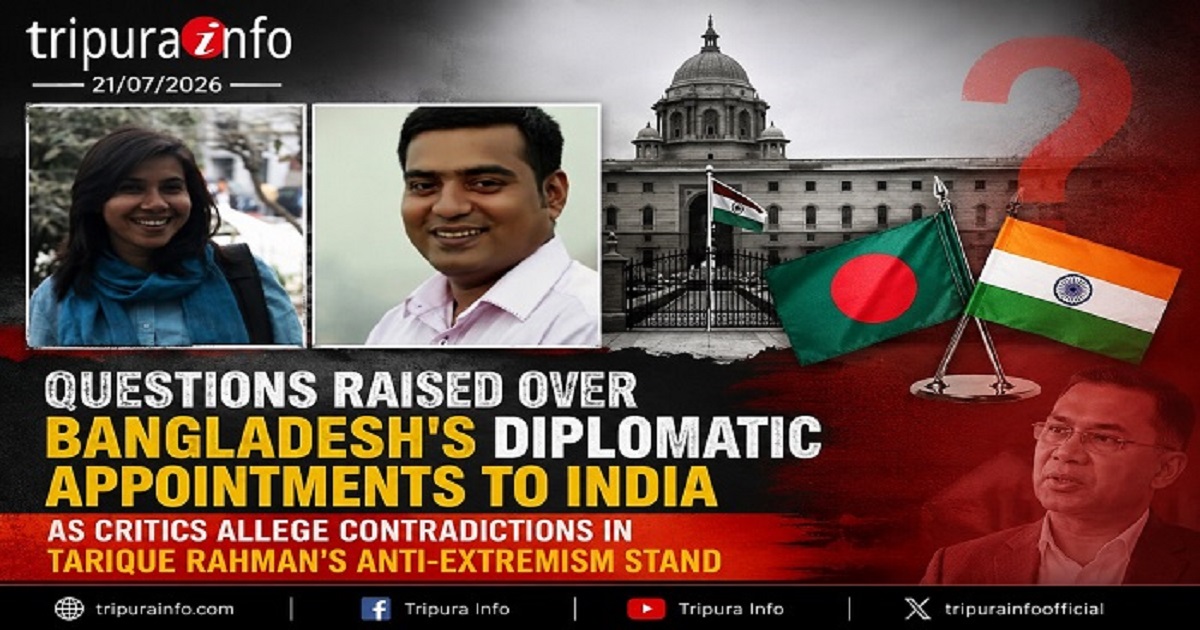 Fresh controversy has emerged in India over the appointment of Bangladesh diplomatic and media officials to key missions in India, with critics alleging that the BNP-led government of Prime Minister Tarique Rahman is sending individuals who have previously made controversial remarks about India despite repeatedly projecting itself as being firmly opposed to extremism and religious fundamentalism.
The BNP government came to power after winning the February 12 general election, campaigning on promises to curb religious extremism and restore democratic governance following the interim administration. During the interim period, Bangladesh witnessed growing concerns over the rise of extremist narratives and increasing anti-India rhetoric, leading many in New Delhi to expect improved bilateral ties once the BNP assumed office.
Prime Minister Tarique Rahman has consistently spoken against extremist forces. Addressing a public gathering recently, he alleged that a hidden network had become active after the fall of the previous regime on August 5, claiming that many of its members had remained absent during the anti-government movement but resurfaced after the elections to influence public discourse.
However, the government's recent diplomatic nominations have sparked criticism from sections of political observers and commentators, who argue that the appointments appear inconsistent with Tarique Rahman's public stance against extremist and anti-India elements.
At the centre of the controversy is the reported appointment of journalist Saidur Rahman as Press Minister at the Bangladesh High Commission in New Delhi. Critics allege that Rahman had previously made several controversial social media posts, including claims blaming India for historical events related to Bangladesh's Liberation War and the Pilkhana tragedy. He is also accused by his detractors of making critical remarks against Indian Prime Minister Narendra Modi and the BJP-led government.
Political critics in India further claim that Saidur Rahman had earlier been associated with Islamist student politics and was active in campaigns opposing elections during the tenure of Bangladesh's interim government. According to these allegations, he later secured the diplomatic posting through influential networks within the BNP after the party formed the government.
Similar questions have also been raised regarding the reported nomination of Umme Marufa as First Secretary (Press) at the Bangladesh Deputy High Commission in Kolkata. Critics allege that she had maintained close links with influential figures in the interim administration, reportedly opposed the election process before the polls, and had publicly supported political forces opposed to the BNP during that period.
She has also been accused by political opponents of promoting narratives considered hostile to India's strategic interests, including controversial discussions relating to India's northeastern region. Reports further suggest that her appointment remains pending due to unspecified administrative reasons.
The controversy has triggered political debate in Bangladesh, with critics asking why individuals who are alleged to have previously promoted anti-India or extremist-linked narratives are being nominated to sensitive diplomatic positions in India while the Prime Minister continues to publicly campaign against such forces.
more news...