Three Months After ADC Polls, Tipra Motha Yet to Form Full Executive Council, Raising Questions Over Governance and Development
By Our Correspondent
Agartala, July 18, 2026
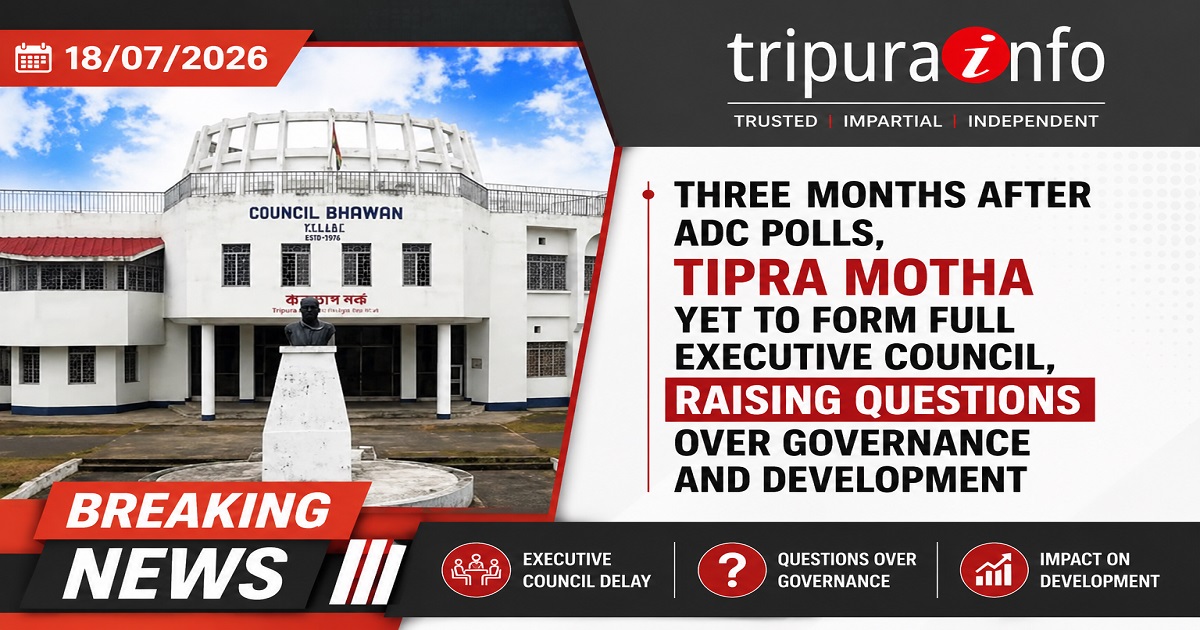 More than three months after securing a sweeping mandate in the elections to the Tripura Tribal Areas Autonomous District Council (TTAADC), Tipra Motha has yet to constitute a full Executive Council, prompting growing concern among political observers and residents over the pace of governance and development in the autonomous district.
In the April 2026 ADC elections, Tipra Motha won 24 of the 28 elected seats, raising expectations that the party would swiftly establish a full administrative structure and begin implementing its development agenda. However, only two Executive Members have been appointed so far. Runiel Debbarma was sworn in as the Chief Executive Member (CEM), while retired bureaucrat CK Jamatia was later inducted as an Executive Member. The remaining seven Executive Member positions continue to remain vacant.
According to party sources, the delay is primarily due to multiple contenders for the remaining portfolios, making it difficult for the leadership to reach a final decision. Sources further indicated that Tipra Motha founder Pradyot Kishore Debbarma is currently abroad to watch the FIFA World Cup and is expected to return on July 22. Following his return, the party is likely to appoint seven more Members of the District Council (MDCs) as Executive Members, completing the Executive Council.
The prolonged delay has, however, drawn criticism from the opposition, which has questioned whether the functioning of a constitutional institution should remain stalled due to the personal schedule of a political leader. Critics argue that the absence of a full Executive Council has effectively concentrated administrative responsibilities on just two members, slowing decision-making and affecting the implementation of development projects, welfare programmes, and routine administrative functions.
The TTAADC was established to promote the socio-economic development of the indigenous tribal population, safeguard their cultural identity, and strengthen local self-governance. Many observers believe the current administrative vacuum is undermining these objectives. Political analysts also point out that the previous ADC administration faced several controversies and allegations of irregularities, leading people to expect a more transparent and efficient administration under the newly elected council. However, with the Executive Council still incomplete after more than three months, many believe public optimism is gradually giving way to disappointment.
Another challenge lies ahead with the Supreme Court-directed elections to 587 Village Committees, scheduled for September. Uncertainty remains over whether the elections can be conducted on time, particularly as the festive season begins during the same period. Questions have also been raised regarding the preparedness of the administration to conduct the polls within the stipulated timeframe.
Meanwhile, fresh controversy has emerged over recruitment in the ADC. Allegations have surfaced that appointment letters for around 220 posts were distributed without adequate transparency. Critics have alleged favouritism and irregularities in the recruitment process. Dissatisfaction is reportedly not limited to the public, as several elected MDCs have also expressed frustration, claiming they were unable to secure employment opportunities even for unemployed youth from their own constituencies. These allegations have intensified demands for an impartial and high-level inquiry into the recruitment process.
The delay in constituting a full Executive Council, coupled with recruitment-related controversies and concerns over slow administrative functioning, has triggered renewed debate over the future direction of governance in the TTAADC.
more news...