Rotary Club of Agartala Distributes Modern Egg & Chicken Carts to Empower Street Vendors and Promote Nutrition
By Our Correspondent
Agartala, June 6, 2026
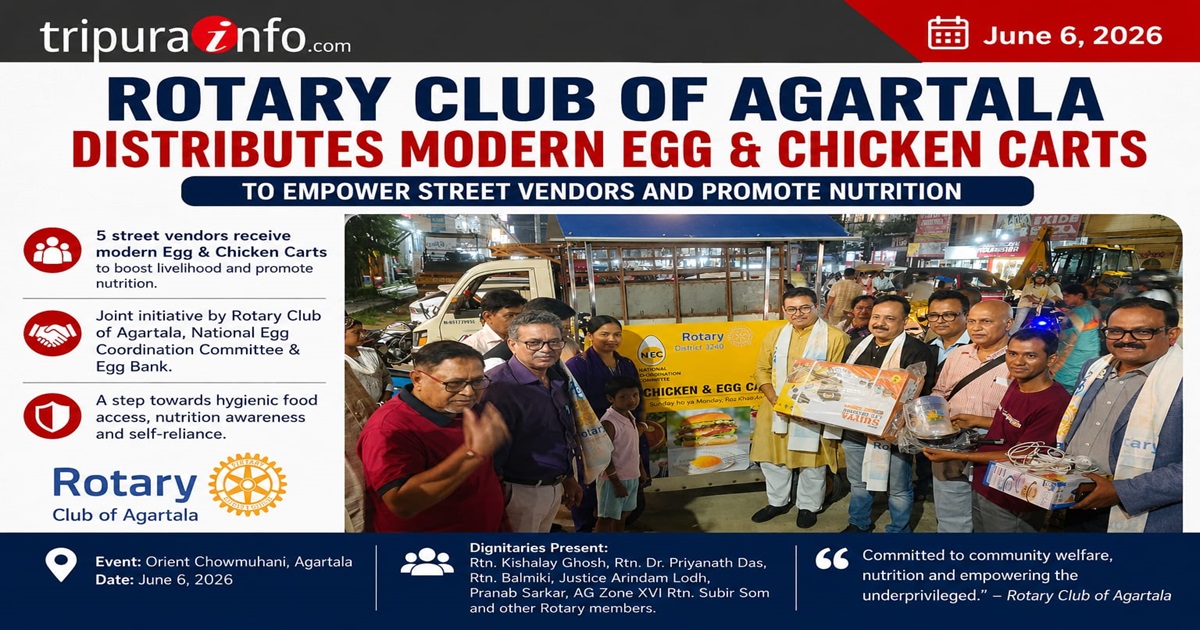 In a significant initiative aimed at improving public nutrition and supporting the livelihoods of small entrepreneurs, the Rotary Club of Agartala on Saturday distributed five modern four-wheeled “Egg & Chicken Carts” to marginal street vendors in the city.
The programme was organized in collaboration with the National Egg Coordination Committee and the Egg Bank. The ceremonial handover took place at Orient Chowmuhani in Agartala, where the beneficiaries received the specially designed carts equipped to facilitate hygienic and efficient sale of eggs and chicken products.
The initiative seeks to address two important objectives simultaneously, enhancing access to nutritious food among the general public and creating sustainable income generating opportunities for economically disadvantaged street vendors. By providing modern vending infrastructure, the project aims to ensure that quality protein-rich food products such as eggs and chicken become more readily available to consumers while improving the earning potential of vendors.
Speaking on the occasion, officials of the Rotary Club emphasized that the upgraded carts would enable vendors to maintain higher standards of cleanliness and food safety. The improved presentation and convenience offered by the carts are also expected to attract more customers, thereby increasing business opportunities for the beneficiaries.
The programme was attended by several distinguished personalities, including Rotary Club of Agartala President Kishalay Ghosh, Club Secretary Dr. Priyanath Das, and Egg Bank representative Balmiki. Among the notable guests present were Justice Arindam Lodh, veteran journalist Pranab Sarkar, and Assistant Governor, Zone XVI, Subir Som, along with other Rotary members and dignitaries.
Rotary Club officials stated that the project reflects the organization’s commitment to community welfare, nutritional awareness, and economic empowerment. They further informed that similar people-centric initiatives aimed at supporting underprivileged sections of society would continue in the future.
The programme was widely appreciated as a model of community-driven development, combining public health awareness with livelihood enhancement and demonstrating how collaborative efforts can create meaningful social impact.
more news...