BJP–TIPRA Motha: From Confrontation to Cooperation? Pushpabanta Heritage Hotel Event Raises Questions Over Political Strategy and Alliance Dynamics
By Our Correspondent
Agartala, June 6, 2026
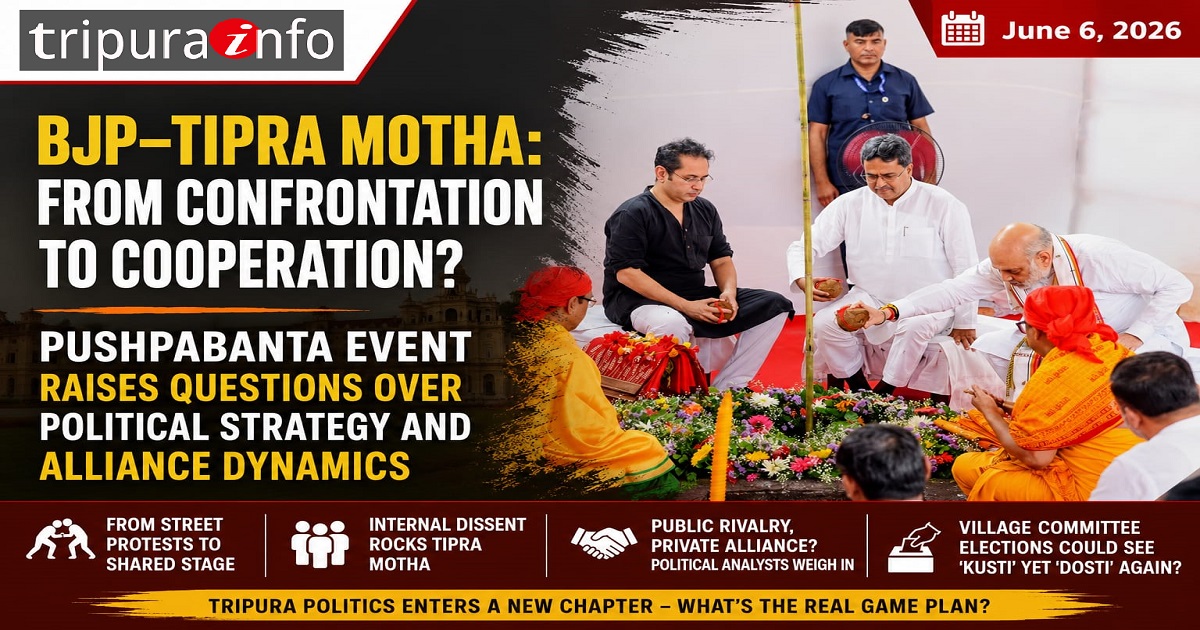 The foundation-laying ceremony for the transformation of the historic Pushpabanta Palace into a five-star heritage hotel has triggered intense political debate across Tripura, with observers questioning whether the event signifies a major shift in the relationship between the ruling BJP and its ally, TIPRA Motha.
Held in the presence of Union Home Minister Amit Shah, the ceremony brought together Chief Minister Manik Saha and TIPRA Motha founder Pradyot Kishore Debbarma on the same stage, a sight that has generated widespread discussion given the latter's earlier opposition to the conversion of the royal palace into a commercial hotel.
For many political observers, the event was not merely a tourism and investment initiative but a significant political signal ahead of future electoral contests in the state, particularly in the tribal areas.
The controversy stems from the fact that TIPRA Motha and its leadership had previously opposed the proposed hotel project, arguing that the palace represented an important symbol of Tripura's royal and indigenous heritage. The party had mobilized supporters and tribal youth against the proposal, raising concerns over the preservation of historical and cultural identity.
Against this backdrop, Pradyot Kishore Debbarma's participation in the groundbreaking ceremony has drawn criticism from sections of both political opponents and supporters. Critics argue that the move represents a dramatic reversal of the party's earlier stand and raises questions about the consistency of its political messaging.
The issue has also exposed internal tensions within TIPRA Motha.
Political observers noted another striking aspect of the ceremony: despite sharing the stage, Chief Minister Dr Manik Saha and Pradyot Kishore Debbarma were not seen engaging in any visible conversation.
According to analysts, this carefully maintained distance may have been as politically significant as their joint presence. While publicly maintaining separate political identities, both parties continue to remain allies in the state government, creating a complex dynamic often described as competition in public, cooperation in power.
Many commentators view the latest developments through the lens of what is often referred to in Indian politics as the wrestling versus friendship strategy, public confrontation combined with private cooperation.
During the recent ADC elections, BJP and TIPRA Motha contested aggressively against each other, leading to sharp political exchanges. However, the two parties remain partners in governance. The Pushpabanta event has renewed debate over whether future electoral battles, including the upcoming Village Committee elections, may witness a similar pattern.
Political analysts suggest that both parties have a common interest in preventing the opposition, particularly the Left Front led by the Communist Party of India (Marxist), from regaining lost ground in tribal regions. As a result, public rivalry and strategic cooperation could continue simultaneously.
more news...