Allegations of Rotten Meat Supply, Serious Questions Raised Over Animal Welfare at Sepahijala Zoological Park
By Our Correspondent
Agartala, June 5, 2026
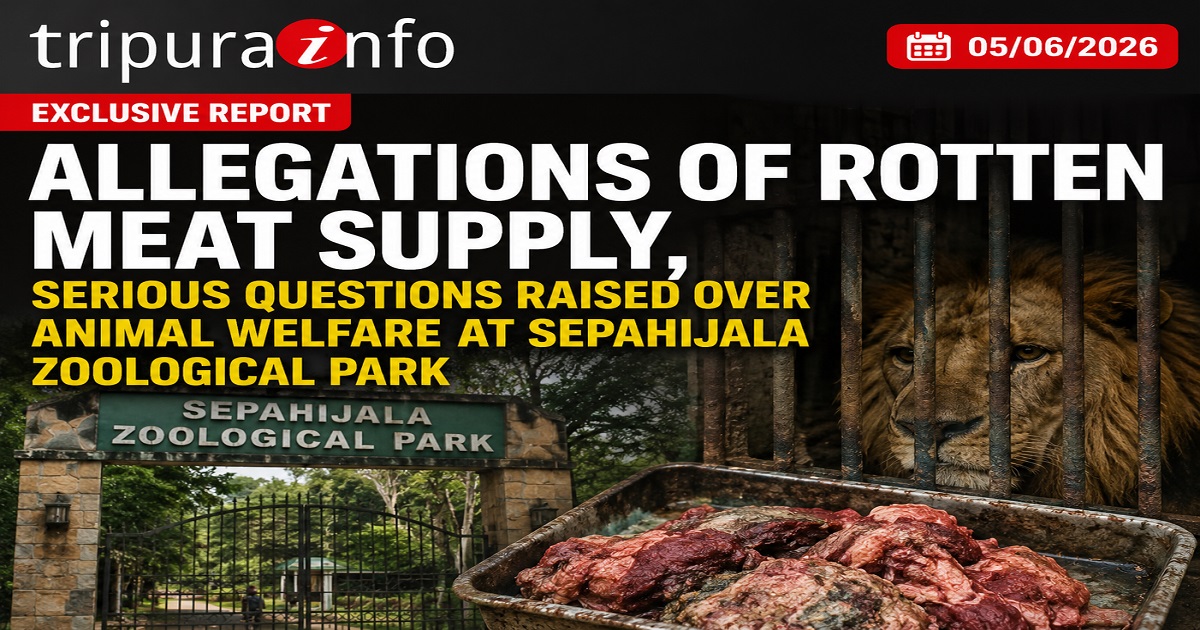 A series of serious allegations involving the supply of diseased cattle as animal feed, declining wildlife populations and large-scale administrative irregularities have raised concerns over the functioning of Sepahijala Zoological Park, Tripura's only zoological park and one of the state's most important wildlife conservation centres.
The latest controversy revolves around allegations that sick, diseased and even dead cattle are being supplied as food for carnivorous animals housed in the zoo. According to Zoo sources, valuable and protected species such as lions, leopards, tigers and foxes are allegedly being fed meat obtained from unhealthy cattle instead of properly screened and healthy livestock.
The allegations surfaced after a reportedly critically ill cow was brought to the zoo's slaughterhouse. Sources claim that the animal was so weak that it could barely stand on its own. Local residents alleged that the cow had been suffering from prolonged illness and was eventually sold to the zoo after treatment efforts failed. Despite its condition, the animal was allegedly approved for use as feed by the concerned veterinary Doctor.
Under established zoo protocols, any animal intended to be used as food for carnivorous species must remain under observation for at least 24 hours before slaughter. During this period, mandatory health examinations, including checks for body temperature, pulse rate, Complete Blood Count (CBC), Anthrax, Brucellosis and Foot-and-Mouth Disease (FMD), are required. Only after successfully clearing these tests can an animal be declared fit for consumption. However, complainants allege that these procedures are frequently ignored and that a commission-based network influences decisions to certify diseased livestock as suitable feed, thereby placing the health of valuable zoo animals at considerable risk.
The allegations have revived memories of a controversial incident in May last year when two four-year-old male lions and a spotted deer died at the zoo, triggering widespread concern among conservationists and animal lovers. Although discussions and preliminary inquiries followed the incident, critics claim that no conclusive findings were made public and the matter gradually disappeared from public scrutiny.
Questions have also been raised regarding the availability and accountability of officials responsible for animal welfare. On Thursday, local journalists attempts to obtain a response from the zoo's Incharge Niranjan Debnath, IFS and veterinary officer, Dr. Keshab Debnath, reportedly proved unsuccessful as both of them were allegedly not present in office until late in the morning. Workers associated with the slaughterhouse reportedly acknowledged that the sick animal had recently been brought many times there.
Alongside the allegations concerning animal feed, serious concerns have emerged over what wildlife enthusiasts describe as a significant decline in the number of animals and birds within the zoo and sanctuary. Long-time observers and former employees claim that the population of several species has fallen sharply during the past few years. According to them, many species now have less than half the population they had just two years ago.
Particularly alarming, they say, is the noticeable reduction in free-ranging monkeys and deer that once moved freely throughout the sanctuary's forested areas. Some conservationists allege that inadequate feeding arrangements and poor habitat management may have forced animals to leave their traditional habitats in search of food, although these claims have not been independently verified.
The controversy has been further intensified by allegations of administrative mismanagement and financial irregularities. Wildlife enthusiasts and former staff members claim that funds allocated for animal maintenance, feed, veterinary care and welfare have not always been properly utilised. According to these allegations, some officials treated the institution more as a routine workplace than a wildlife conservation centre, while the actual condition of the animals often remained hidden behind favourable official reports.
more news...