Tripura Government Moves to Cut Fuel Costs: CM Reduces Convoy Vehicles, Debate Grows Over Misuse of Official Cars
By Our Correspondent
Agartala, May 14, 2026
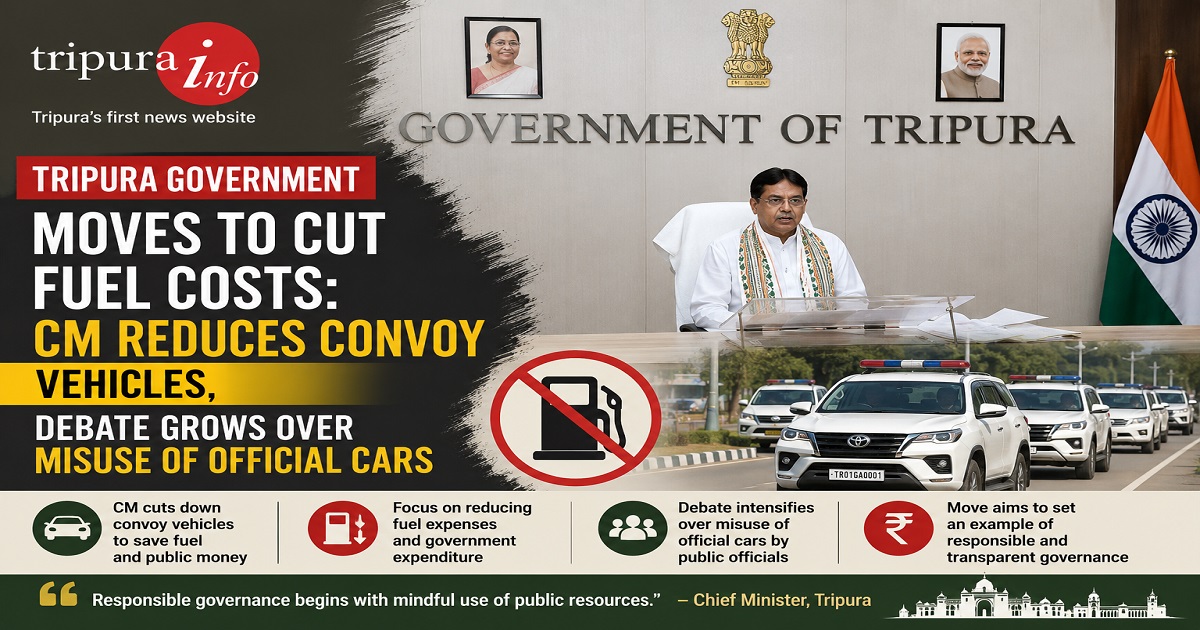 In a major step towards austerity and fuel conservation, the Tripura government has reportedly decided to reduce the number of vehicles in the convoy of Chief Minister Manik Saha.
According to highly placed sources, after returning from Assam yesterday, the Chief Minister instructed the Director General of Police (DGP) to immediately minimize the convoy size. Sources said that apart from the Chief Minister’s own vehicle, only three additional vehicles will now remain in the convoy.
The move is being viewed as a symbolic yet significant message from the state leadership at a time when governments across the country are under pressure to reduce expenditure and fuel consumption.
The development comes shortly after the Tripura government introduced another major cost-saving measure by directing that only 50 percent of government Group C and Group D employees will physically attend offices, while the remaining employees will work from home on a rotational basis.
However, the latest decisions have also triggered a wider public debate regarding the alleged misuse of vehicles attached to different government departments and offices.
Many observers and citizens argue that if the real objective is to save fuel and public money, then the government must also take strict action against the widespread use of privately owned vehicles operating unofficially in various departments. Allegations have frequently surfaced that several such vehicles continue to run throughout the day and night at government expense, often being used not only for official duties but also for personal activities including household shopping, school transportation of children, and other non-official purposes.
Critics point out that private vehicles are technically not supposed to function as regular government office vehicles unless there is proper authorization and necessity. They believe unchecked vehicle practices have substantially increased unnecessary fuel expenditure in government administration.
Administrative experts and civil society members have suggested that a broader transport rationalization policy could bring major financial and environmental benefits. According to them, every department should reassess the number of official vehicles based on actual necessity and the seniority of officers.
They propose that instead of assigning separate vehicles to multiple officers, three to four officials could share a single vehicle for official work whenever possible. Such a system, they say, would sharply reduce petrol and diesel consumption, lower government expenditure, reduce traffic congestion, and help decrease environmental pollution.
Experts believe that even small administrative reforms in transportation management can create a large positive impact for the state and the country by promoting efficiency, accountability, and sustainable governance.
The Chief Minister’s latest directive is now being seen as the beginning of a possible larger reform in the functioning of government transport systems in Tripura.
more news...