Veteran BBC Journalist Mark Tully Passes Away at 90, His Deep Connection with Tripura and Northeast India Remembered
By Our Correspondent
Agartala, January 26, 2026
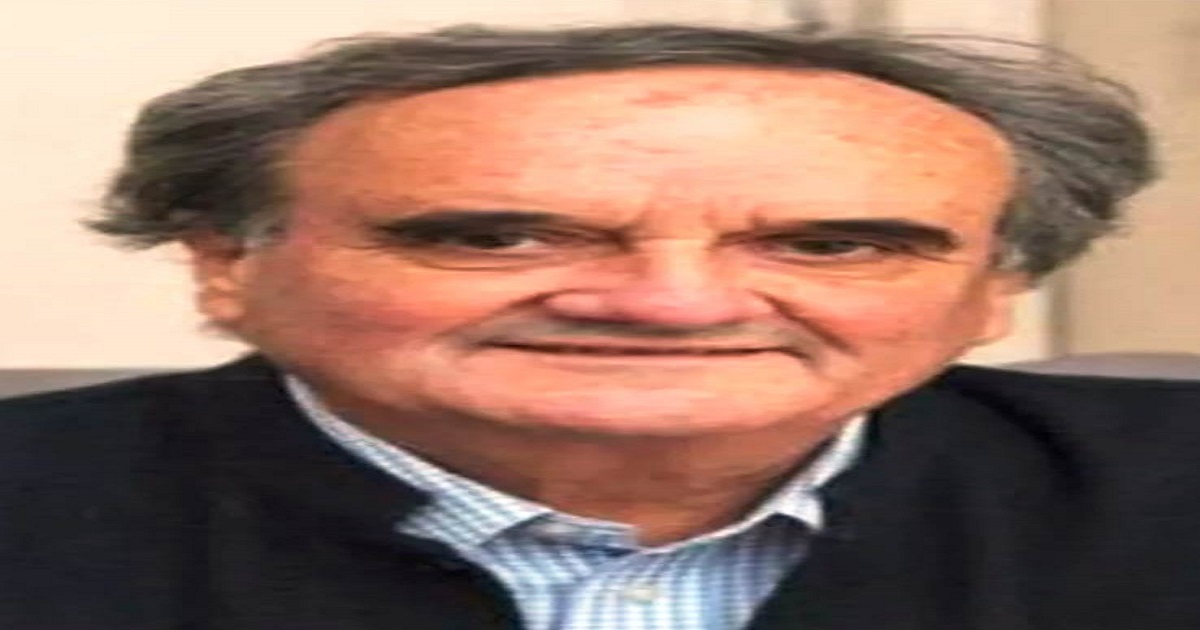 The Press Club of India on Saturday announced with profound sorrow the demise of legendary journalist, author and broadcaster Mark Tully, who passed away at a private hospital in New Delhi. He was 90. Widely regarded as one of the most authoritative foreign voices on India, Tully’s death marks the end of an era in Indian journalism.
An iconic figure associated for decades with the BBC, Mark Tully earned immense respect for his fearless reporting, deep understanding of India’s social and political fabric, and his ability to narrate complex realities with clarity and compassion. Revered as the BBC’s Voice of India, Tully’s journalistic career left an indelible imprint not only on national reporting but also on coverage of sensitive and conflict-prone regions, including Tripura and the Northeast.
During the 1990s, Mark Tully visited Tripura on multiple occasions, closely following and reporting on major developments in the state. His reporting from Tripura and the wider Northeast focused particularly on militancy-related incidents, border issues and the broader security situation that shaped the region during that turbulent period. His visits coincided with some of the most challenging years for Tripura, when insurgency and cross-border concerns dominated public life.
Tully also covered developments linked to the Chittagong Hill Tracts (CHT) crisis, a subject of immense regional significance, which had direct implications for Tripura and other northeastern states. His ground reports from Tripura and neighboring areas helped bring national and international attention to the complex political, ethnic and security dimensions of the Northeast, an area often neglected in mainstream discourse.
Known for his commitment to ground reporting, Tully believed in travelling extensively to understand local realities firsthand. His work from Tripura and the Northeast reflected this ethos, combining factual accuracy with a humane perspective on conflict, displacement and governance.
Born in 1936, Mark Tully returned to India in 1971 after a brief stint in London, a period that coincided with the India–Pakistan War and the Bangladesh Liberation War, events that firmly established his credibility across South Asia. Over the decades, he covered landmark events such as the Emergency, Operation Blue Star, and the demolition of the Babri Masjid in Ayodhya in 1992, where he was among the few journalists present on the ground.
Apart from journalism, Tully authored around ten influential books, both fiction and non-fiction, exploring India’s social, political and spiritual life. His acclaimed work No Full Stops in India (1988) critically examined Westernization while celebrating India’s indigenous traditions.
In recognition of his contributions, Mark Tully was knighted in the United Kingdom in 2002 and was awarded the Padma Bhushan by the Government of India in 2005.
The Press Club of India extended heartfelt condolences to his family, friends and admirers, stating that his legacy of ethical, fearless and insightful journalism will continue to inspire generations. His cremation will be held on Sunday at 4 pm at the Lodhi Road Crematorium in New Delhi.
For Tripura and the Northeast, Mark Tully will be remembered not just as a global journalist, but as a rare voice who took the region seriously, listened, observed, and reported its stories with depth, dignity and honesty, said Jayanta Debnath, Editor Tripurainfo.com.
more news...