Tripura to Establish State’s First Community-Based Forest Conservation Area at Vangmun under IGDC CREFLAT Project
By Our Correspondent
Agartala, January 25, 2026
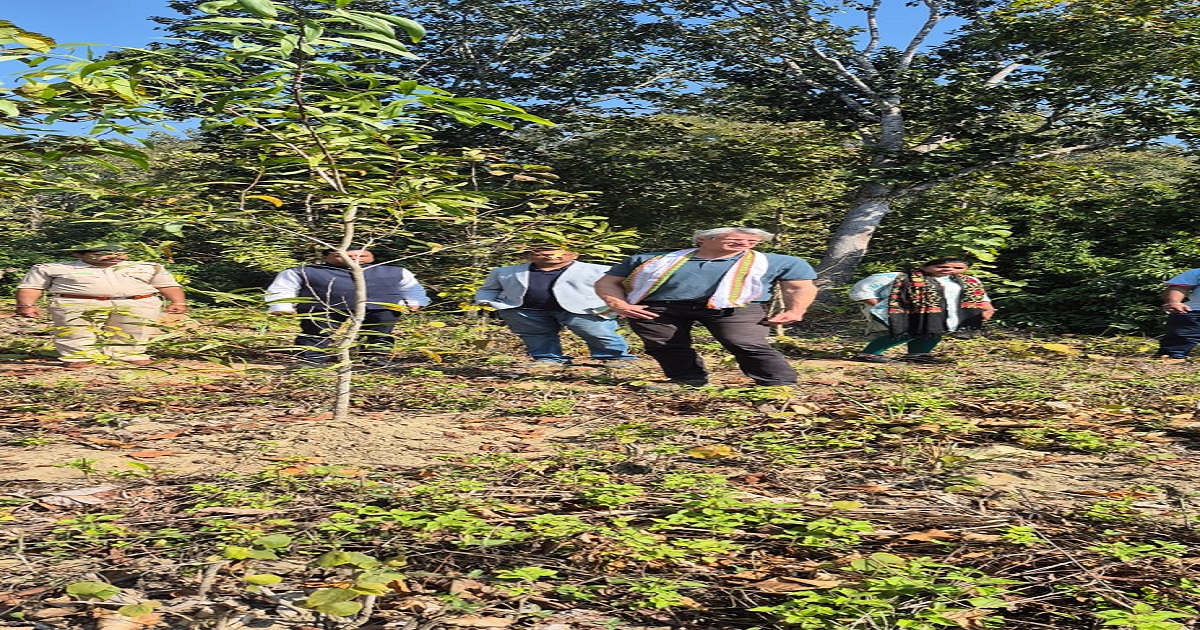 In a major step towards participatory forest governance and sustainable biodiversity conservation, Tripura is set to establish its first ever Community Based Forest Conservation Area (CBCA) at Vangmun village under the Vangmun Forest Range, as part of the IGDC CREFLAT Project. The initiative was highlighted during the visit of the Mid-Term Review (MTR) Team, which reviewed project interventions and community engagement on the ground.
S Prabhu, IFS, Chief Executive Officer and Project Director of the IGDC Project, stated while quoting the review report that the CBCA at Vangmun marks a landmark shift in forest management by placing local communities at the center of conservation efforts. Under this initiative, the Vangmun community has voluntarily identified and dedicated 60 hectares of forest land for conservation, biodiversity protection, and sustainable forest management. It has also been proposed to include an additional 200 hectares of adjoining undisturbed forest area under the community-based conservation framework.
The proposed CBCA area is recognized as a rich biodiversity hotspot, home to numerous bird species and diverse flora. The area also holds strong potential for forest-based ecotourism, opening avenues for nature-based livelihoods and environmental awareness among local communities. To ensure effective management, the community has constituted a CBCA Management Committee responsible for protection, planning, monitoring, and sustainable use of forest resources.
The MTR Team, comprising Mr. Steffen Schuelein from Germany, Ms. Monica Bosco from New Delhi, along with S Prabhu, CEO and Project Director, Dr. Rajan Kotru of GOPA, Dr. Vincent Darlong, and members of the Project Management Consultant (PMC) and Project Management Agency (PMA), visited the site and highly appreciated the initiative. The team congratulated the Vangmun community for becoming the first CBCA management committee in Tripura, describing the effort as a model for community-driven conservation in the state.
As part of the mid-term review, the team also visited Juri Reserved Forest Village Committee under Dasda Forest Range on January 24, 2026. Detailed interactions were held with villagers to assess the impact and effectiveness of project interventions, including Entry Point Activities (EPA), soil and water conservation measures, livelihood support, and climate resilience initiatives.
During discussions, villagers informed the team that more than ten check dams constructed during the first phase of the project have significantly reduced surface runoff, improved soil moisture, and minimized flood impacts. However, they emphasized the need for regular maintenance to ensure long-term effectiveness of these structures.
Under EPA support, the construction of two market sheds and three waiting sheds has brought tangible benefits to the community, particularly women. A female beneficiary shared that the market sheds are now used daily for selling jhum products, bamboo shoots, vegetables, and other forest-based produce. Earlier, vendors were forced to sell in open spaces and faced severe difficulties during the rainy season. The new infrastructure has improved income security, convenience, and dignity, prompting the community to request additional market sheds to accommodate more sellers.
The MTR Team also sought feedback on climate change impacts at the village level. Villagers reported increasing water scarcity, rising summer temperatures, declining groundwater levels, and reduced flow in springs and tributaries. These changes have adversely affected agriculture, especially during the dry season, with almost all crops showing stress, although pineapple was reported to be comparatively more resilient.
On the causes of forest degradation and climate stress, villagers pointed to population growth and the expanding demand for rubber cultivation, which have led to a gradual reduction in forest cover. This, they noted, has aggravated local climate variability, water stress, and ecological imbalance. They strongly advocated for forest restoration and diversification of plantations and demanded plantation support for species such as Yongchak, Amlaki, Mahogany, and Arjun, assuring land availability and full community protection with support from the Forest Department.
Livelihood promotion activities were also reviewed during the visit. Jay Laxmi Self Help Group is engaged in cloth trading, piggery, and goatery, and expressed interest in group-based candle making. Growth SHG highlighted the urgent need for road connectivity to improve market access and income generation. Villagers informed the team that candle products sold at Rs. 60 per unit generate a net profit of around Rs. 20, indicating strong livelihood potential.
The CIG-based fishery activity supported through IGDC loan assistance for fingerling release was also assessed. The community explained that beneficiaries are selected based on ration card status to prioritize the most vulnerable households. Group responsibility ensures loan repayment, with collective support mechanisms for members facing genuine hardships. The MTR Team suggested further strengthening VDPIC solidarity mechanisms to support such households.
Additional community demands included the establishment of a sacred grove near the temple area, development of a playground for children, proper demarcation of patta lands, and installation of clear signage indicating man-days generated under Assisted Natural Regeneration activities covering 5.5 hectares at Juri. The MTR Team advised that these demands may be addressed through performance-based planning and sustainability considerations. To address drinking water issues, the team suggested exploring the construction of an overhead water tank through convergence with other schemes.
The visit reaffirmed the IGDC CREFLAT Project’s commitment to community empowerment, biodiversity conservation, climate-resilient livelihoods, and participatory forest governance, while underscoring the critical role of local communities in tackling climate change and ensuring long-term ecological restoration in Tripura.
more news...