Northeast Holds Immense Tourism and Industrial Potential, Needs Global Promotion and Political Will: Key Voices at US-India Indo-Pacific Dialogue in Kolkata
By Our Correspondent
Agartala, January 16, 2026
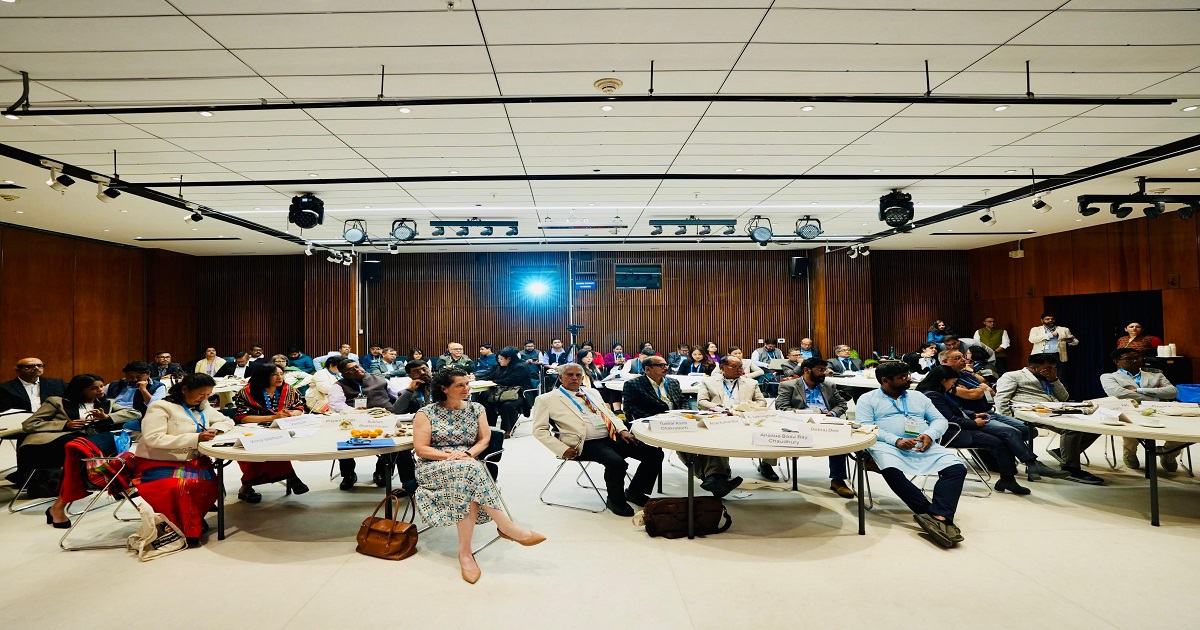 Journalists, business leaders, and policy stakeholders from Tripura and other Northeastern states unanimously agreed that the Northeast does not suffer from a lack of potential in tourism, industry, or trade, but from a shortage of strong political will and effective national and international promotion. This consensus emerged during the US Strategic Framework for the Indo-Pacific: North Eastern Dialogue, Kolkata Chapter, jointly organised by the US Consulate General Kolkata and the Observer Research Foundation (ORF) at the American Center, Kolkata.
The dialogue, which brought together around 30 invited participants from across the Northeastern region, served as a national-level pre-dissemination consultation ahead of a larger policy dialogue scheduled in New Delhi in March. The event focused on advancing US- India cooperation under the Indo-Pacific framework, with special emphasis on connectivity, trade, supply-chain resilience, and regional development.
Representing Tripura in person were Jayanta Debnath, Editor of Tripurainfo.com journalist and independent researcher Debaraj Deb, Anup Kumar Ray, President of the Tripura Chamber of Commerce, and Tushar Kanti Chakraborty, Secretary of the Tripura Merchant Association. All four highlighted Tripura’s vast but underutilised potential in tourism development, bamboo-based industries, rubber production, natural gas, and cross-border trade with Bangladesh.
While acknowledging these opportunities, most participants stressed that the expansion of trade and connectivity,
especially for Tripura, depends significantly on the early restoration of normal law and order conditions in neighbouring Bangladesh. Several speakers underlined the need for timely diplomatic engagement by India and the United States to ensure regional stability, which is critical for cross-border commerce and investment confidence.
Discussions during the dialogue repeatedly returned to the need for attracting both domestic and foreign capital to the Northeast, while simultaneously prioritising local entrepreneurship and indigenous initiatives. Participants from different Northeastern states pointed out that there is no shortage of development schemes under the Government of India led by Prime Minister Narendra Modi. However, they raised serious concerns about the practical difficulties faced by new entrepreneurs in accessing these schemes due to procedural hurdles and administrative bottlenecks.
Infrastructure development also emerged as a key concern. While central government projects for road construction, railway expansion, and connectivity have been initiated across the region, representatives from several states complained about the slow pace of implementation, which continues to hinder economic growth and investor interest.
Another strong recommendation from the floor was the need for more such consultative dialogues, where the Government of India and state governments directly engage with people from the Northeastern states to listen to their ground-level problems and aspirations.
Addressing the gathering, US Consul General Kathy Giles Diaz emphasised the strategic importance of Eastern and Northeastern India in the Indo-Pacific vision. She reiterated the United States commitment to a free, open, and prosperous Indo-Pacific, highlighting the role of the Quad-India, the US, Japan, and Australia, in strengthening infrastructure, clean energy, supply chains, and maritime security.
She noted that improved ports, railways, inland waterways, roads, and digital corridors could integrate the Northeast more effectively into global markets, while reducing dependence on fragile or adversarial supply chains. Referring to her recent visits to Kolkata and Haldia ports, the Consul General underlined the importance of maritime security for uninterrupted trade and regional stability.
The session was moderated by Nilanjan Ghosh, Vice President, Development Studies, ORF and Project Director, along with Anasua Basu Ray Chaudhury, Senior Fellow, Neighborhood Studies Initiative, ORF. The inaugural session also featured virtual presentations by Abigail Bard, Quad Team Coordinator, and Jeffrey Wang, Quad Team Lead and Political Officer from the US. State Department, who provided deeper insights into America’s strategic vision for the Indo-Pacific and the centrality of maritime security.
The dialogue concluded with a shared understanding that meaningful development of the Northeast requires not just policy frameworks, but faster implementation, regional stability, global visibility, and continuous engagement with local stakeholders, so that the region’s enormous potential can finally translate into sustainable growth.
more news...