Importance of Vaccination in Protecting Animal and Public Health
Sahil Singh
June 23, 2026
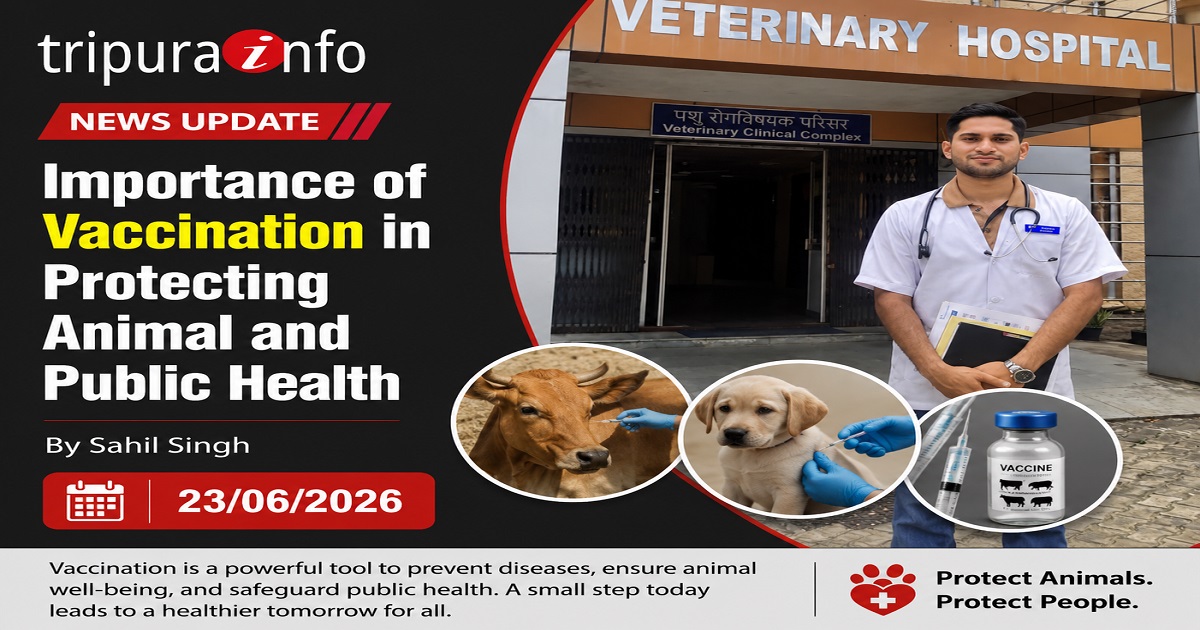 Vaccination is one of the most effective and economical methods for preventing infectious diseases in animals and protecting public health. In a country like India, where livestock farming plays an important role in rural livelihoods, animal health is directly connected to human welfare and economic stability. Farmers depend on cattle, poultry, goats, and other livestock for milk, meat, eggs, and income. However, infectious diseases such as Foot-and-Mouth Disease (FMD), Lumpy Skin Disease (LSD), and Rabies continue to threaten livestock production and public health.
These diseases not only reduce animal productivity but also cause severe economic losses, animal deaths, and risks to human life. Vaccination works by stimulating the immune system of animals to develop protection against specific diseases before infection occurs. It helps the body recognize harmful pathogens and fight them effectively in the future. Vaccines are preventive, not curative, meaning they must be given before exposure to disease.
One of the major advantages of vaccination is the development of herd immunity. When a large proportion of animals in a population are vaccinated, the spread of disease is greatly reduced. This is especially important in rural areas where animals share grazing lands and water sources. Herd immunity protects not only vaccinated animals but also those that are weak, young, or unvaccinated.
Vaccination also has a major role in protecting public health because several animal diseases are zoonotic, meaning they can spread from animals to humans. Rabies is one of the most serious zoonotic diseases and is almost always fatal once clinical signs appear. According to the World Health Organization (WHO), rabies causes approximately 59,000 human deaths globally every year.
From an economic perspective, vaccination is highly beneficial for farmers. The cost of preventive vaccination is much lower than the cost of treating diseases after outbreaks occur. Regular vaccination programs help farmers maintain healthy livestock and ensure stable income and food security.
Another important benefit of vaccination is the reduction in excessive use of antibiotics and medicines. Healthy vaccinated animals require fewer treatments, which helps in controlling antimicrobial resistance (AMR), a growing global concern.
Despite these benefits, lack of awareness among farmers remains a major challenge in many rural areas. Proper awareness programs, timely booster doses, maintenance of cold-chain systems, and government vaccination campaigns are essential for successful disease control.
References:
• World Health Organization (WHO). Rabies Fact Sheet and Global Rabies Data.
• Government of India. National Animal Disease Control Programme (NADCP).
• Scientific Reports (2024). Rabies Control and 70% Vaccination Threshold.
• Food and Agriculture Organization (FAO). Animal Health and Vaccination Programs.
(Sahil Singh, 3rd Year Student, College of Veterinary Sciences and Animal Husbandry, Selesih, Aizawl)
আরও পড়ুন...