Woodworms in the Social Fabric: A Theatre That Disturbs, Questions, and Reflects
Prashanta Chakraborty
April 14, 2026
At a time when incidents such as
the Obhoya, Nirbhaya, Hathras, and Unnao cases continue to trouble the nation’s
conscience, Sanjay Kar brings this unsettling reality to the stage through his
play Ghun (Woodworm), performed at Muktodhara.
Disha, a college student and the
only child of her parents, is seen studying late into the night in preparation
for her examinations. The stillness of the hour is repeatedly disrupted by
calls from an unknown number. Each time the phone rings, she answers, only to
be met with an ominous silence. Irritated and increasingly uneasy, she
eventually switches off her phone.
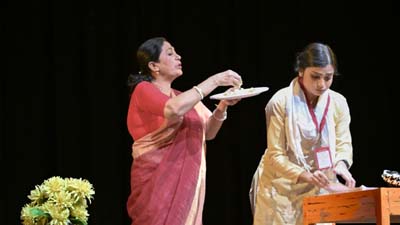
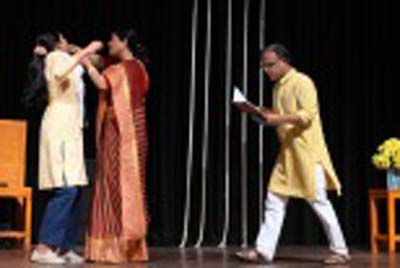 The following scene presents an
intimate domestic tableau. As Disha prepares to leave for college, her mother
feeds her with quiet tenderness while her father reads out answers to assist
her revision. Through this portrayal, the playwright underscores the depth of
parental care and affection. At the same time, the audience feels a satirical
undertone. Beneath this warmth lies a subtle but critical question: in their
effort to nurture and protect, are they inadvertently fostering a sense of
dependence that may leave their child ill-equipped to face the harsh realities
of the outside world?
The following scene presents an
intimate domestic tableau. As Disha prepares to leave for college, her mother
feeds her with quiet tenderness while her father reads out answers to assist
her revision. Through this portrayal, the playwright underscores the depth of
parental care and affection. At the same time, the audience feels a satirical
undertone. Beneath this warmth lies a subtle but critical question: in their
effort to nurture and protect, are they inadvertently fostering a sense of
dependence that may leave their child ill-equipped to face the harsh realities
of the outside world?
The atmosphere shifts when Disha’s
father comes across a news report about a young woman—also named Disha—in
Hyderabad, who has been brutally raped and murdered. The news casts a pall of
anxiety over the household. Her mother, deeply shaken, begins to impose
restrictions, forbidding Disha from stepping out after dusk.
 At college, Disha shares a
relationship with Debesh, her boyfriend, a student leader and the son of an
affluent and influential man who envisions a future for him in active politics,
perhaps as an MLA or even a Minister. After completing her examinations and
engaging in light-hearted conversations with her classmates, in which Debesh is
also present, Disha returns home. Relaxed and relieved, she looks forward to
resting, eager to surrender herself to a long and peaceful sleep.
At college, Disha shares a
relationship with Debesh, her boyfriend, a student leader and the son of an
affluent and influential man who envisions a future for him in active politics,
perhaps as an MLA or even a Minister. After completing her examinations and
engaging in light-hearted conversations with her classmates, in which Debesh is
also present, Disha returns home. Relaxed and relieved, she looks forward to
resting, eager to surrender herself to a long and peaceful sleep.
Yet the calls persist—arriving
late at night from unknown numbers. Each time Disha answers, she is met with an
unsettling silence, a void that only intensifies her growing anxiety. She
considers blocking the numbers, but before she can take any decisive step, a
far more disturbing development occurs: she begins to receive her own private
photographs and videos. A deep sense of fear grips her.
Disha and her father begin to suspect
Sunu, the painter’s son, who is working at their house during this period. His
manner of speaking—ambiguous and somewhat evasive—further reinforces their
suspicion.
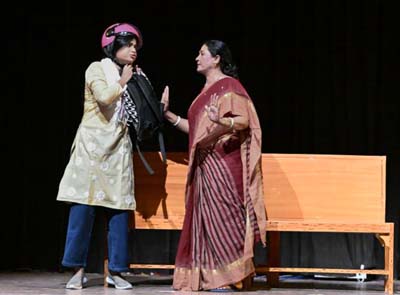 In search of support, Disha turns
to her aunt, a socially prominent and influential figure in the locality.
However, instead of offering protection, her aunt responds with indifference
and reproach. She places the blame squarely on Disha—reflecting a troubling
societal tendency to hold the victim responsible. Concerned about safeguarding
her own social standing, she chooses to distance herself from the situation.
In search of support, Disha turns
to her aunt, a socially prominent and influential figure in the locality.
However, instead of offering protection, her aunt responds with indifference
and reproach. She places the blame squarely on Disha—reflecting a troubling
societal tendency to hold the victim responsible. Concerned about safeguarding
her own social standing, she chooses to distance herself from the situation.
Disha then reaches out to her
boyfriend, hoping for reassurance. Yet he, preoccupied with club puja
arrangements and college elections, remains largely indifferent. Increasingly
isolated and distressed, Disha, along with a few close friends, finally seeks
the assistance of a human rights activist.
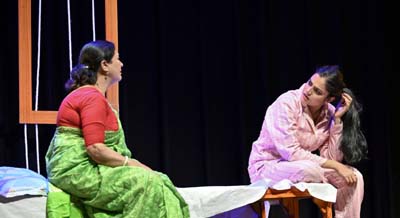 Together, they approach the police
to file an FIR against one of their classmates, whose identity is disclosed in
a letter written by Debu to Disha. Meanwhile, the situation takes a tragic
turn: Debu dies by suicide.
Together, they approach the police
to file an FIR against one of their classmates, whose identity is disclosed in
a letter written by Debu to Disha. Meanwhile, the situation takes a tragic
turn: Debu dies by suicide.
It is subsequently revealed that
he had been clandestinely capturing images of Disha’s private moments. More
disturbingly, he himself had been ensnared in a larger web of manipulation—trapped
by the Sohel, a close associate of Debesh, who lured him with the promise of a
guaranteed opportunity in an upcoming dance show. Further inquiry reveals that
Debesh’s father is a wealthy and influential figure, whose position enables him
to shield and perpetuate such criminal activities, making him complicit in the
unfolding events.
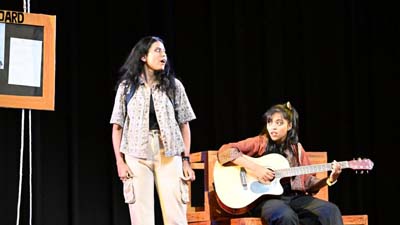 The play, however, adopts a
somewhat conciliatory tone towards its conclusion, suggesting a resolution
where “all ends well.” This closure appears at odds with the harsh realities of
our society, where such violations rarely find neat or reassuring endings. The
dissonance between the play’s resolution and lived experience leaves behind a
lingering sense of incompleteness, raising critical questions about the adequacy
of its moral and social vision.
The play, however, adopts a
somewhat conciliatory tone towards its conclusion, suggesting a resolution
where “all ends well.” This closure appears at odds with the harsh realities of
our society, where such violations rarely find neat or reassuring endings. The
dissonance between the play’s resolution and lived experience leaves behind a
lingering sense of incompleteness, raising critical questions about the adequacy
of its moral and social vision.
Pallabi Deb, in her portrayal of
Disha, delivers a remarkably compelling performance. Having been associated
with the group for a considerable period, she brings both experience and depth
to the role. Yet what stands out most is the natural ease of her acting—so
simple and convincing that it effortlessly draws the audience into Disha’s
emotional world, earning her genuine appreciation and applause.
 Rameswar and Rama emerge as two of
the most seasoned characters in the play, lending it a sense of stability and
emotional grounding. Sanjay Kar, in the role of Disha’s father, embodies the
quiet dignity of a teacher with restraint and credibility. Supriti Ghosh,
portraying Rama, Disha’s mother and a homemaker, offers a nuanced performance,
capturing both the tenderness and the underlying anxieties of a parent caught
in distressing circumstances. The play is further enriched by a diverse
ensemble cast. Antareep Roy appears as Debu, while Tomoghno Dhor portrays
Protyush, and Subhrashis Bhattacharjee takes on the role of Rupam. Debarpeet
Chakraborty plays Sohel, and Diptanu Nag appears as the personal assistant.
Bishnupada Chakraborty embodies Sunu, with Asim Kumar Roy as Biman, and
Chadrasnato Kar portraying Debesh. The female characters are brought to life by
Porshiya Choudhury as Rimpi, Arnisha Acharjee as Shalini, Protikhha Debnath as
Shinjini, and Sumita Bhowmik as Soma.
Rameswar and Rama emerge as two of
the most seasoned characters in the play, lending it a sense of stability and
emotional grounding. Sanjay Kar, in the role of Disha’s father, embodies the
quiet dignity of a teacher with restraint and credibility. Supriti Ghosh,
portraying Rama, Disha’s mother and a homemaker, offers a nuanced performance,
capturing both the tenderness and the underlying anxieties of a parent caught
in distressing circumstances. The play is further enriched by a diverse
ensemble cast. Antareep Roy appears as Debu, while Tomoghno Dhor portrays
Protyush, and Subhrashis Bhattacharjee takes on the role of Rupam. Debarpeet
Chakraborty plays Sohel, and Diptanu Nag appears as the personal assistant.
Bishnupada Chakraborty embodies Sunu, with Asim Kumar Roy as Biman, and
Chadrasnato Kar portraying Debesh. The female characters are brought to life by
Porshiya Choudhury as Rimpi, Arnisha Acharjee as Shalini, Protikhha Debnath as
Shinjini, and Sumita Bhowmik as Soma.
Chadrasnato Kar, in his dual role
as assistant director and actor, has firmly established himself as a significant
presence in Tripura’s theatre landscape. His portrayal of the antagonist is
assured and engaging, marked by a strong command of stagecraft.
 Porshiya Choudhury also deserves
special commendation for composing the music for the lyrics, thereby endowing the
production with a distinctive aural identity. Her contribution enhances the
emotional texture of the performance, even if, at certain moments, a more
organic alignment with the dramatic progression might have yielded a subtler
effect.
Porshiya Choudhury also deserves
special commendation for composing the music for the lyrics, thereby endowing the
production with a distinctive aural identity. Her contribution enhances the
emotional texture of the performance, even if, at certain moments, a more
organic alignment with the dramatic progression might have yielded a subtler
effect.
Debapreet Chakraborty is
impressive in his role as Sohel, delivering a performance marked by vitality
and commitment. However, his reliance on rapid movements and frequent leaps,
while visually dynamic, at times appears excessive, momentarily disrupting the
dramatic equilibrium and eliciting concern for his physical safety.
 Despite the brevity of his role,
Asim Kumar Roy, as Biman, leaves a lasting impression. His controlled and
precise embodiment of a half-paralysed patient reflects careful attention to
physical detail. Simultaneously, his portrayal of Biman’s unsettling curiosity
about the scandal involving his niece Disha—particularly her private images and
videos—introduces a disquieting moral tension that deepens the impact of his
otherwise limited stage presence. The stage designed by Asim Babu is simple,
allowing people the space to imagine more.
Despite the brevity of his role,
Asim Kumar Roy, as Biman, leaves a lasting impression. His controlled and
precise embodiment of a half-paralysed patient reflects careful attention to
physical detail. Simultaneously, his portrayal of Biman’s unsettling curiosity
about the scandal involving his niece Disha—particularly her private images and
videos—introduces a disquieting moral tension that deepens the impact of his
otherwise limited stage presence. The stage designed by Asim Babu is simple,
allowing people the space to imagine more.
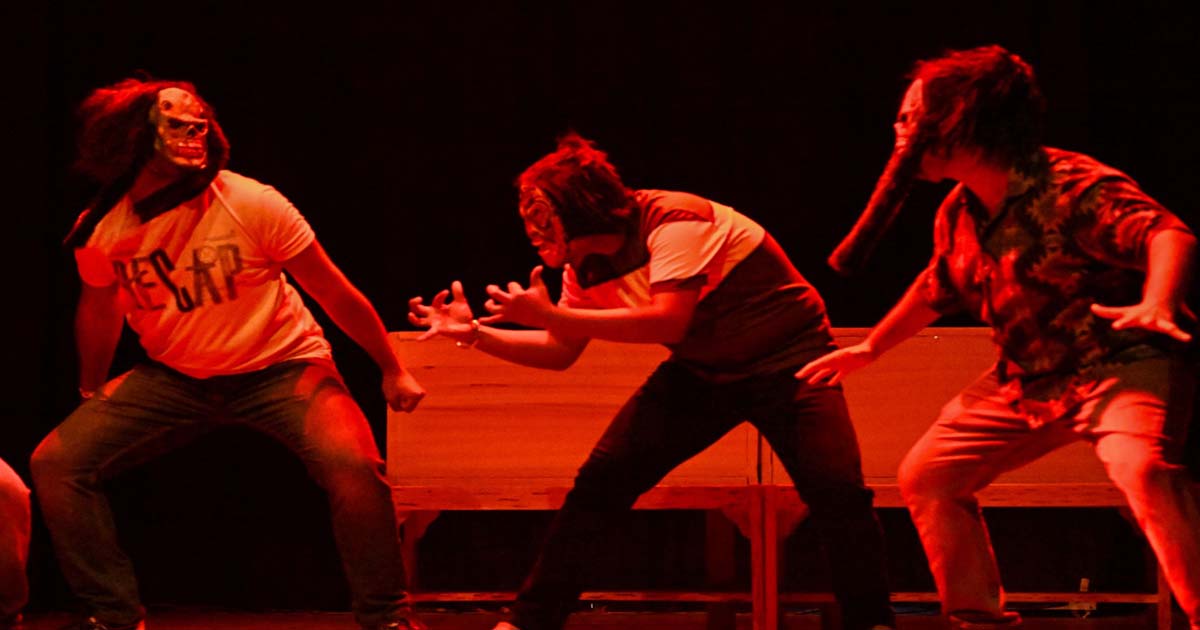
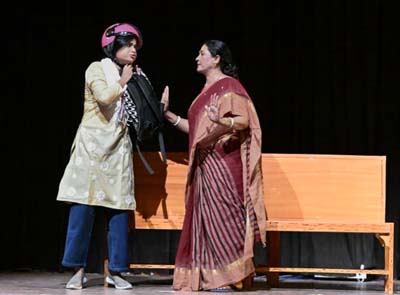 The judicious deployment of blue
and red lighting—especially in sequences where masked figures hover around
Disha—imbues the production with a heightened symbolic charge. This visual
strategy operates suggestively, evoking the insidious and deeply entrenched
presence of the ‘woodworm’ within the social fabric. The image of Disha being
ensnared emerges as a compelling metaphor for her entrapment from all sides,
while the intermittent red flickers effectively signal the escalation of
crisis, underscoring the mounting suspicion and moral scrutiny directed at her
by relatives and neighbours.
The judicious deployment of blue
and red lighting—especially in sequences where masked figures hover around
Disha—imbues the production with a heightened symbolic charge. This visual
strategy operates suggestively, evoking the insidious and deeply entrenched
presence of the ‘woodworm’ within the social fabric. The image of Disha being
ensnared emerges as a compelling metaphor for her entrapment from all sides,
while the intermittent red flickers effectively signal the escalation of
crisis, underscoring the mounting suspicion and moral scrutiny directed at her
by relatives and neighbours.
The musical arrangement, executed
by the Nandy Brothers, provides a cohesive aural framework to the production.
The background music, arranged by Sukanta Sankarshan with assistance from
Tamoghna Dhar, aligns well with the dramatic progression, though at certain
moments a more measured use might have prevented a tendency towards
overemphasis. Playback contributions by Pallab Nag, Swarnali Debnath, Porshiya
Choudhury, Supali Das, Sani Sarkar, Chandrasnata Kar, and Sa Re Ga Ma Pa's
famous Ananya Sarkar collectively enrich the sonic texture of the performance.
Saptadeep Majumder’s choreography
remains functional, occasionally rising to moments of evocative expression that
resonate with the thematic concerns of the play. Supriti Ghosh’s costume design
is contextually appropriate, maintaining a quiet fidelity to the narrative
without seeking undue prominence. Arnisha Acharjee’s management of materials
ensures a smooth visual execution, while lighting, handled by Anirban Banik and
Khokan Miah, stands out as one of the more effective technical elements of the
production.
The production is further
sustained by the committed efforts of Subhas Das, Chandan Barman, Pranab
Majumder, Pradeep Deb, Khokan Sarkar, Jaisankar Bhattacharjee, Diptanu
Majumder, Jharna Halder, Sourasnato Kar, Daipayan, Supali, Ananya, Ayusmita,
Amartya, Dinaj, Ridhhiman, and Debayan, whose collective contribution underpins
the overall coherence and execution of the staging.
What is particularly striking from
a critical standpoint is that the actors are not confined to performance alone.
They extend their involvement across multiple dimensions of the
production—contributing to costume design, singing, the background music, and
stage preparation. This collaborative ethos not only reflects a commendable
versatility but also lends the production a sense of organic cohesion, where
the boundaries between performer and creator are meaningfully blurred.
(Tripurainfo)
more articles...