From Human Being to Being Human: A Moral Journey in an Age of Power
Prasanta Chakraborty
January 14, 2026
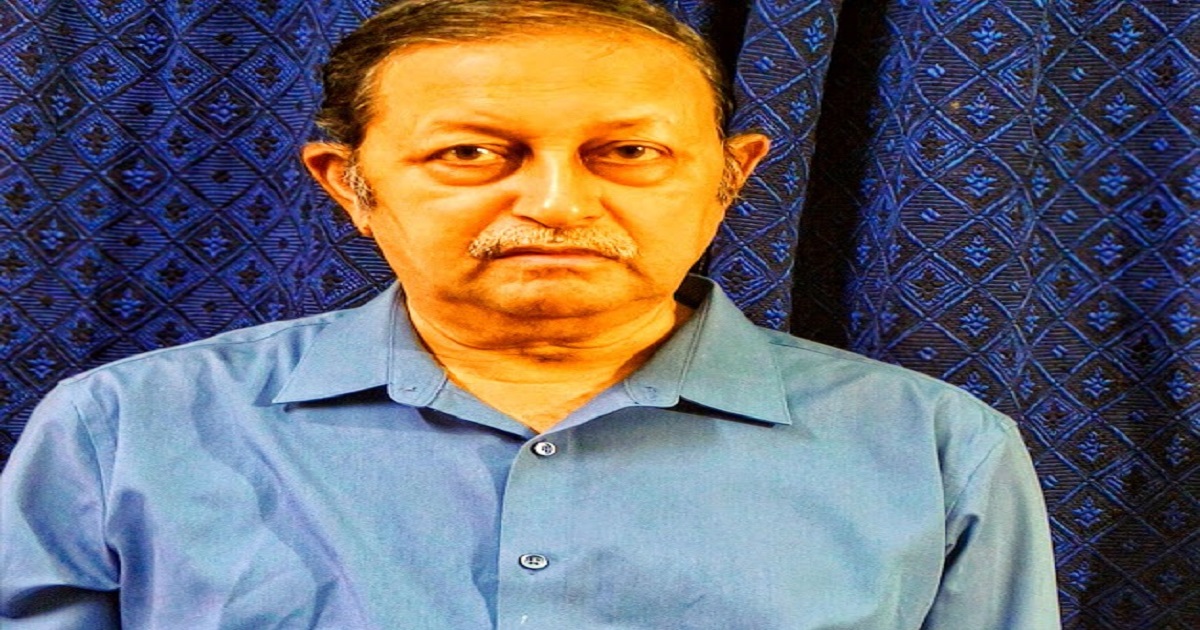
A few days ago, I read a deeply moving article titled “Journey from Human Being to Being Human” by Professor Syed Arshad Hussain of Tripura University. What struck me most was not merely the theme, but the rare sensitivity with which a physicist approached an ethical and emotional question that lies at the very core of human existence. In an age that often compartmentalises knowledge—assigning emotion to poets, ethics to philosophers, and numbers to scientists—this essay quietly dismantled such boundaries. It reminded me that intellectual discipline does not confine moral imagination; rather, when guided by empathy, it sharpens and deepens it. I was profoundly touched, not only as a reader, but as a fellow human being navigating the same moral uncertainties.
Professor Hussain draws a crucial distinction that deserves reflection: to be a human being is a biological inevitability, but to be human is a lifelong moral endeavour. Biology grants us existence, but humanity must be cultivated. It does not arrive automatically with birth; it is shaped through conduct, conscience, and care. One becomes human not in isolation, but in relationship—with family, neighbours, strangers, and society at large. Humanity is not a static quality but a continuous process of becoming, where learning and unlearning walk side by side, and where empathy, responsibility, and compassion must find expression in lived action rather than abstract belief.
This distinction explains a troubling paradox of our times: despite the world being densely populated by human beings, truly humane individuals remain painfully rare. History remembers them precisely because they were exceptions, not norms. Ishwar Chandra Vidyasagar stands today as a towering symbol of compassion and moral courage, yet in his own lifetime, he was ridiculed, resisted, and vilified. His kindness disturbed comfort; his ethics unsettled entrenched orthodoxy. Raja Rammohan Roy, now celebrated as a pioneer of social reform, was once condemned as a destroyer of tradition. Beyond our borders, Socrates was poisoned for questioning authority, Galileo silenced for speaking truth to power, and Copernicus marginalised for daring to reimagine the universe. Their lives reveal an enduring truth: humanity often appears threatening to those invested in power, habit, and unquestioned authority.
The making—or unmaking—of humanity begins early. Elders within families and leaders within societies shape the fragile moral architecture of individuals. From childhood, human beings absorb not only instructions but attitudes—who deserves respect, who does not; whom to include, whom to exclude; whom to fear, and whom to dominate. Long before one learns to reason, one learns to conform. Social conditioning precedes moral reflection. Gradually, individuals become reflections of their environment, shaped more by imitation than inquiry. Independent thought becomes a risk; obedience is rewarded as virtue.
As years pass, these inherited attitudes harden into belief systems. People learn to think, speak, and act in ways that align with dominant norms, even when those norms are unjust or cruel. Questioning becomes dangerous, dissent uncomfortable, and silence safer than truth. Thus, societies reproduce themselves—not necessarily through wisdom, but through habit. Cruelty survives not because people are inherently cruel, but because conformity is easier than conscience.
It is, therefore, unrealistic to expect figures like Tagore, Vidyasagar, Rammohan Roy, or Vivekananda in every generation. Such individuals are rare not because intelligence or talent is scarce, but because courage is costly. To transcend inherited beliefs, to confront collective prejudice, and to remain humane amid hostility demands moral resilience of the highest order. These individuals often walk alone, misunderstood by their contemporaries and embraced only by posterity. Societies advance not because such individuals are welcomed, but because they persist despite resistance.
This raises an uncomfortable question: if we admire these figures so deeply, why do we hesitate to follow their paths? Why do their ideals inspire reverence but not imitation? The answer is unsettlingly simple. Humanity offers no immediate reward. Integrity invites isolation. Compassion attracts ridicule. Moral clarity provokes conflict. To be humane is often to stand against the current, to risk rejection, and to accept loneliness. It is far easier to worship greatness from a safe distance than to practise it at personal cost.
As a result, societies convert living ideals into harmless symbols. Portraits replace principles; slogans substitute ethics. The radical humanity of great figures is tamed through ritual and repetition. Political forces eagerly appropriate these icons, not to embody their values, but to exploit their moral capital. Vivekananda becomes an emblem devoid of his universalism, Netaji a slogan emptied of his revolutionary urgency, Ambedkar and Tagore ceremonial possessions claimed selectively and conveniently. Their images are displayed, their words quoted, but their ethical demands are quietly ignored.
This symbolic reverence masks a deeper tragedy. Children are increasingly taught not how to be humane, but how to survive by exclusion. From an early age, they are instructed—sometimes subtly, sometimes explicitly—not to mix with the “inferior,” not to share food, space, or dignity. Difference is framed as danger; hierarchy as destiny. Seeds of fear and superiority are planted early, growing into lifelong habits of indifference. Eventually, such individuals may fail even to recognise their obligations toward their own parents, let alone society at large. They remain human beings in form, but humanity slips away unnoticed.
In public life, this erosion of humanity manifests in grotesque and dangerous ways. Leaders thrive by dividing—religion against religion, caste against caste, community against community. Conflict becomes currency; hatred, a political strategy. Society is kept perpetually distracted, quarrelling over identity while structural injustice deepens quietly beneath the surface. Questions of livelihood, healthcare, education, and dignity are drowned out by manufactured outrage. Humanity is sacrificed daily, while power consolidates itself invisibly.
The criminalisation of politics has become the grim hallmark of our times. Individuals tainted by crime increasingly occupy the very seats meant to safeguard justice. Law-making bodies, once envisioned as spaces for deliberation and dialogue, resemble arenas of accusation and counter-accusation. The blame game overshadows sincere engagement with the lived problems of citizens. Meaningful debate is sacrificed at the altar of spectacle, and governance is reduced to noise rather than nurture.
Even more disturbing is the steady erosion of educated, humane, and culturally grounded voices from these institutions. As such individuals retreat—or are systematically pushed out—the moral and intellectual calibre of public life diminishes. What remains is a hollowed democracy, where power speaks louder than conscience, and politics drifts away from its true purpose: the service of citizens and the preservation of collective dignity.
Our own history bears painful witness to this pattern. During the Left rule in Tripura, society fractured into Left and non-Left, severing even personal and social relationships. Today, those lines have merely been redrawn—Hindu versus Muslim, tribal versus non-tribal. With time, divisions have not healed; they have hardened. Communal riots in the 1940s, ethnic violence in the 1980s and 1990s—all followed the same script. Ordinary people suffered displacement, loss, and trauma; leaders remained largely untouched. Power survived; humanity paid the price.
This pattern is not confined to one region or nation. It extends globally. In a capitalist-driven world order, fascistic impulses grow wherever power feels threatened. Smaller nations are coerced, sanctioned, or destabilised for asserting autonomy. The language of democracy masks the logic of domination. Economic anxiety—especially the fear of losing global control—translates into aggression. Oil reserves, currency supremacy, and strategic advantage matter more than human lives. Once again, people suffer; architects of power remain insulated.
Even leaders remembered for simplicity, charisma, or mass appeal have not been immune to authoritarian tendencies. Concentrated power, regardless of ideological colour, breeds intolerance toward dissent. History teaches us repeatedly that fascism is not exclusive to the Right or the Left; it emerges wherever authority fears questioning and accountability.
Today, the situation grows more alarming. Institutions meant to protect justice—the media, the judiciary, electoral bodies—are increasingly compromised. Protest is criminalised. The poor are silenced through fear or bribery. Indigenous and rural communities resisting dispossession are branded enemies and eliminated in the name of development or national interest. As economic crisis deepens, hooliganism rises, and hatred is normalised in the name of religion, caste, gender, or language.
On the global stage, dominant powers promote a dangerous ethic: be ruthless, be self-centred, be strong at the expense of the weak. This ethos devastates not only human society but Nature itself. Weapons annihilate landscapes as mercilessly as they destroy lives. Rivers are poisoned, forests erased, and climate destabilised, severing humanity from its ecological roots. A civilisation that cannot protect its planet cannot claim moral progress.
Yet, even amid this darkness, hope persists—not merely in leaders or institutions, but in the possibility of reclaiming humanity itself. The journey from being a human being to being human is neither easy nor quick, but it remains possible. If leaders choose dialogue over domination, law over force, ethics over ego, societies may yet heal. When humanity is practised rather than preached, ordinary people respond with extraordinary compassion.
The future of our world does not depend solely on ideology, technology, or economic growth. It depends on whether we choose to be human. Only then can a world free from fear, hatred, and relentless division begin to emerge—a world where being human once again matters more than merely being a human being.
(Tripurainfo)
more articles...