Pu'er Tea: Origins, Markets and India's Opening
Pinaki Ranjan Dey
October 7, 2026

Recent
Sale at the Assam Tea Exchange
-
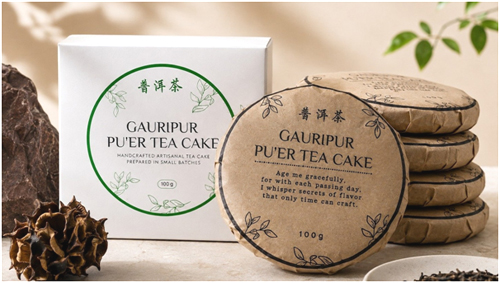
Five kg of
Assam-made Pu'er tea was sold at ₹12,000 per kg at the Guwahati Tea Auction
Centre on Friday 26 September 2026. Key facts:
-
The seller was
Gauripur Tea Industry (Golaghat), which began producing Pu'er in 2023 and uses
only the bud, not the conventional bud-and-two-leaves.
-
It was a
sheng-style batch, sold at Sale 39 through broker J. Thomas & Co. and
bought by Assam Tea Traders. It was the first time the tea was offered at
Guwahati.
-
That compares
with ₹9,000 per kg for an earlier speciality tea from the same producer at
Jorhat in 2023.
-
Industry
leaders see a pathway for other speciality teas. The North Eastern Tea
Association's adviser said Phalap tea could be another speciality tea sold
through the Guwahati auction.
-
India's overall
average export realisation was about ₹304 per kg in January–July 2026. The
Pu'er lot fetched roughly forty times that, though on a tiny volume.
Tripura
Context
Since Government of Tripura
is actively planning to setup the second tea action centre (after Guwahati) in
the entire North Eastern Region at Agartala, opportunities of growing such
premium, high value tea can be explored in near future. This will need a
concerted effort of the R&D institutions including tea breeding
institutions, policy level support, professional and market driven
international branding strategies and linkages with reputed international
buyers.
Brief
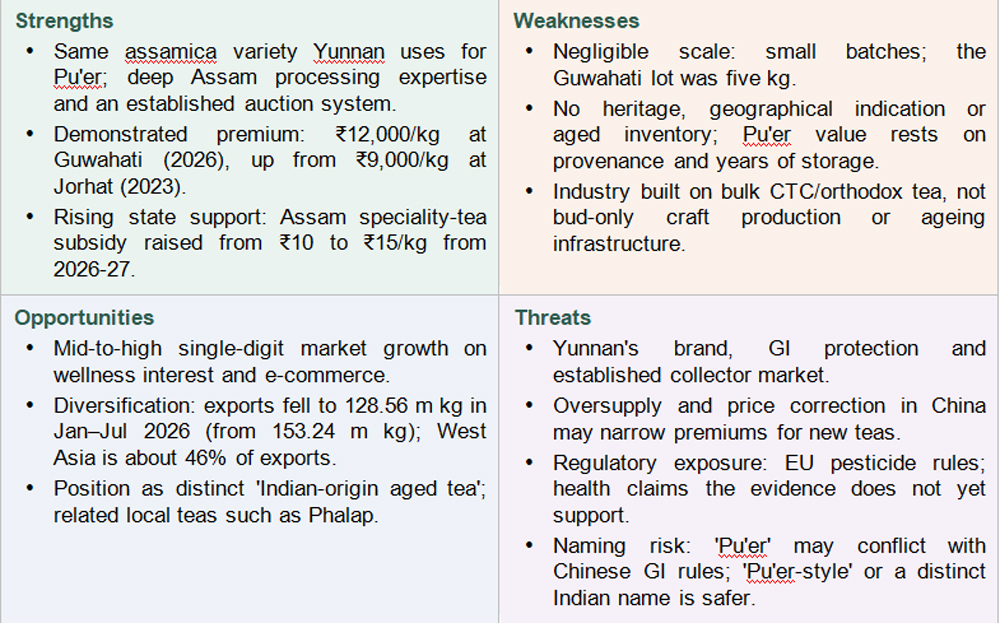
SWOT Analysis: NER’s Position for a Sustainable Share of the Global Pu'er
market
For new market
entrants, particularly from States like Assam, Tripura among the NER States in
India, the critical success factors lie in provenance, storage quality and
brand building.
Origin of Pu’er Tea
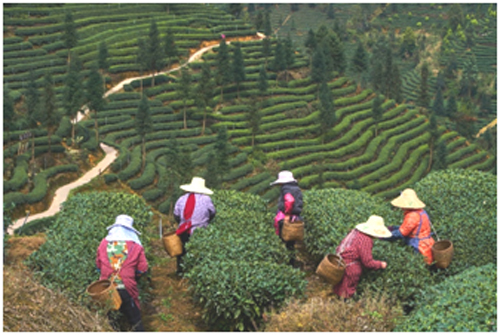 Pu'er (also
written Pu-erh) is a fermented tea traditionally produced in China's Yunnan
province. It is made from large-leaf Camellia sinensis var. assamica, the same
botanical variety that underpins Assam tea. Historically the leaf was pressed
into cakes and bricks so it could travel on the old Tea Horse Road trade routes
toward Tibet and beyond. Today it is protected as a Yunnan geographical
indication. Its core terroirs are Xishuangbanna (Menghai, Yiwu) and the Pu'er
and Lincang areas.
Pu'er (also
written Pu-erh) is a fermented tea traditionally produced in China's Yunnan
province. It is made from large-leaf Camellia sinensis var. assamica, the same
botanical variety that underpins Assam tea. Historically the leaf was pressed
into cakes and bricks so it could travel on the old Tea Horse Road trade routes
toward Tibet and beyond. Today it is protected as a Yunnan geographical
indication. Its core terroirs are Xishuangbanna (Menghai, Yiwu) and the Pu'er
and Lincang areas.
The two main
styles are:
-
Sheng (raw):
naturally
processed and matured over years, so flavour deepens with age.
-
Shou (ripe):
put
through a controlled wet-piling fermentation, which produces a dark, smooth cup
in a few months.
Health Benefits: What the Evidence Supports
Most of the
favourable evidence comes from animal studies. In high-fat-diet mouse work,
Pu'er extract reduced triglycerides, total cholesterol and LDL cholesterol and
reshaped gut microbiota. The compound ‘theabrownin’, formed during fermentation,
is the leading candidate for the effect. Cholesterol-lowering results have been
reported in rodents and in some human subjects.
The human
evidence is thinner. One clinical trial of an aqueous extract found
statistically significant weight loss versus placebo and a mild reduction in
cholesterol. The authors noted that the human trials so far were in Asian
populations. A meta-analysis of animal studies also supports antioxidant
activity, but it calls the human evidence for this long-held belief limited.
Marketing
should therefore say “traditionally valued, with promising early research” and
avoid disease or weight-loss claims. Regulators in India (FSSAI) and the EU are
strict on such claims. Pu'er also contains caffeine, which suits some drinkers
less well.
Global Market Overview
Published
market-size estimates differ widely:
|
Estimate (2025)
|
Source
|
Forecast
|
|
~US$0.4
bn
|
Market
Research Intellect
|
US$700
million by 2035 (6.5% CAGR)
|
|
~US$1.3
bn
|
Verified
Market Reports
|
US$2.5
billion by 2034 (8.3% CAGR)
|
|
~US$1.9
bn
|
Wiseguy
Reports
|
US$3
billion by 2035 (4.4% CAGR)
|
|
~US$2.8
bn
|
Dataintelo
|
US$5.1
billion by 2034 (6.9% CAGR)
|
Since there is
a wide range of estimation about the market size, one can estimate the market
size to be ranging between US$1–3 billion with mid-to-high single-digit growth.
Two points are however consistent across them. China dominates, and raw
(non-fermented) Pu'er held about 73% of China's market in 2021. Growth drivers
are mainly in terms of wellness positioning, premiumisation and e-commerce.
Price
Trend
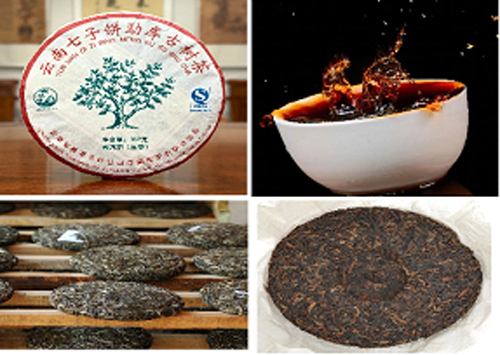
Pu'er has gone
through boom and correction cycles, because it is both a drink and a
collectible.
-
 Speculative
peak, then reset. The
popular Dayi 2020 7542 cake peaked near 50,000 RMB per jin and had fallen to
about 29,000 RMB by early 2024. Commodity factory tea is unlikely to recover
its peak.
Speculative
peak, then reset. The
popular Dayi 2020 7542 cake peaked near 50,000 RMB per jin and had fallen to
about 29,000 RMB by early 2024. Commodity factory tea is unlikely to recover
its peak.
-
Fresh
material is softening. One
long-time industry observer reports that new teas and farmer mao cha are
already seeing price declines in many areas, while quality aged sheng should
keep rising, but much more slowly.
-
Wide
dispersion. Spring
2025 ancient-tree mao cha ranged from low thousands to tens of thousands of RMB
per kg, against about 1,500 for small-tree material. Provenance and tree age
drive the premium.
-
Bottom line.
A
sustainable niche is plausible for States like Assam and Tripura, but it is a
long-horizon, brand-led play. It would need aged inventory, a distinct origin
story and certification. Scale will come over years, not from one auction
result.
Writer:
Founder & Director, pinaarmou Consulting
(www.pinaarmouconsulting.com)
Pu'er is a
post-fermented tea from China's Yunnan province, valued for its ageing
potential and, increasingly, for its wellness appeal. It is a niche, premium
category with uneven pricing. On 26 September 2026 an Assam-made Pu'er-style
tea sold at ₹12,000 per kg at Guwahati, the first time such a tea has been
auctioned there. That is a promising proof of concept, but it is a five-kg lot,
not yet a market.
(Tripurainfo)
more articles...